The programme for your cycling stages
Duration
Day
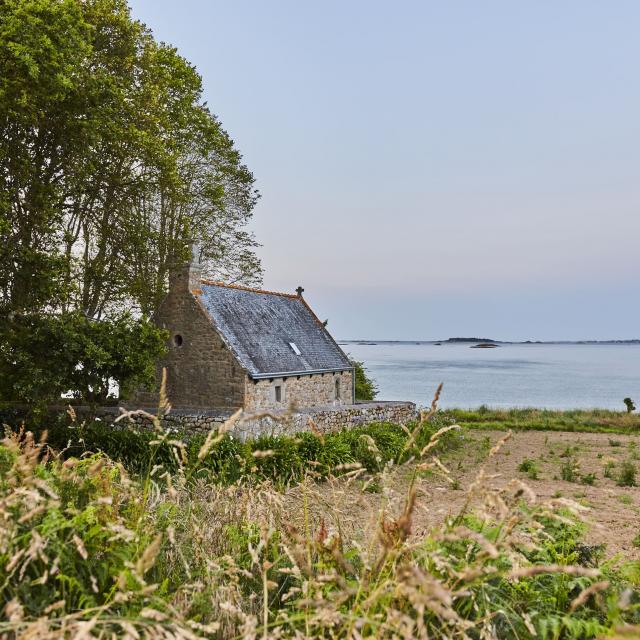
Velo Porzh Guyon Lanmodez 68
|
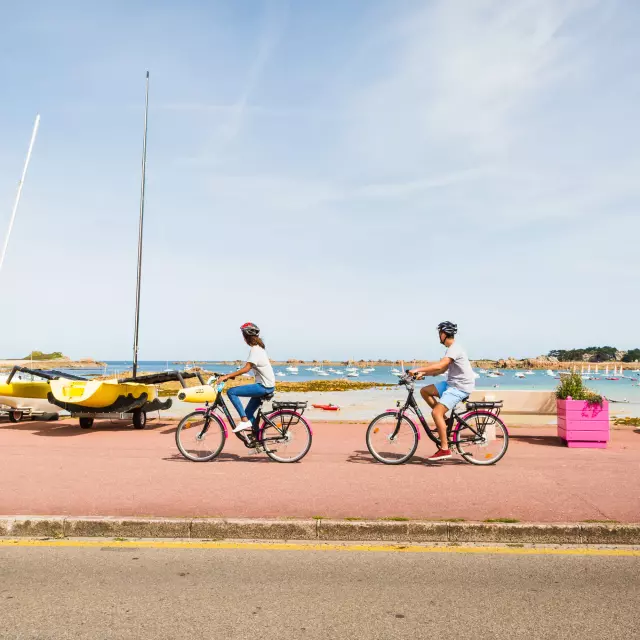
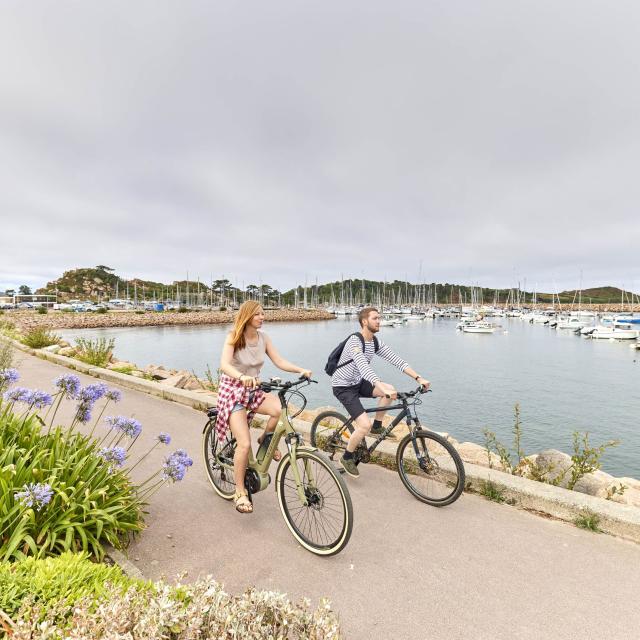
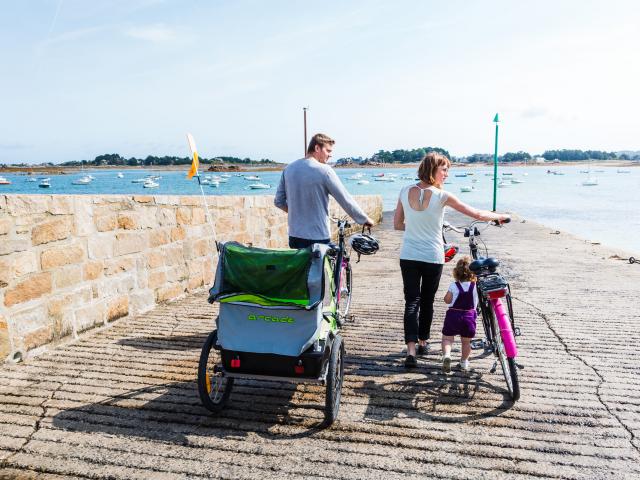
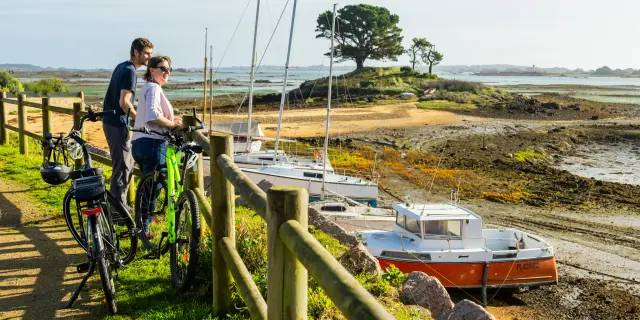
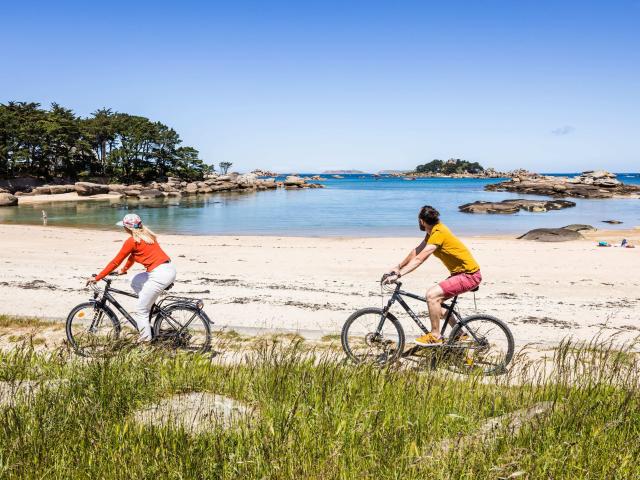
Before you lose the pedals, a little clarification is in order. The Vélomaritime® is a 1500-kilometre cycle route, starting in Roscoff in Brittany and finishing in Dunkirk on the Belgian border. But don’t panic! Here, we suggest you cycle a small section of La Vélomaritime® (on the Pink Granite Coast, of course) with your own bikes. After that, there’s nothing to stop you enjoying a great trip along the whole route…
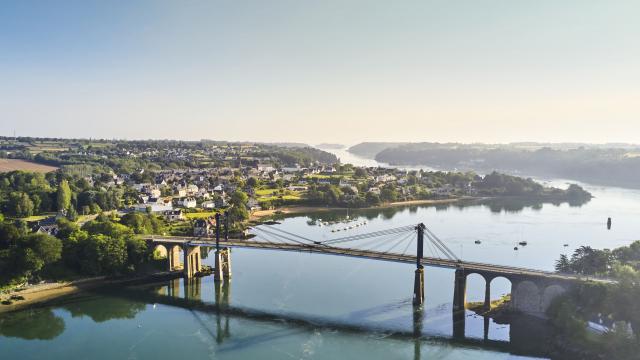
Your cycling adventure gets off to a flying start in Lézardrieux, a small town on the banks of the Trieux, reached by the Saint-Christophe bridge. Here, don’t forget to take a stroll around the town centre square to discover the church of Saint Jean-Baptiste, whose majestic Beaumanoir*-style bell tower and two turrets give the building a distinctive silhouette.
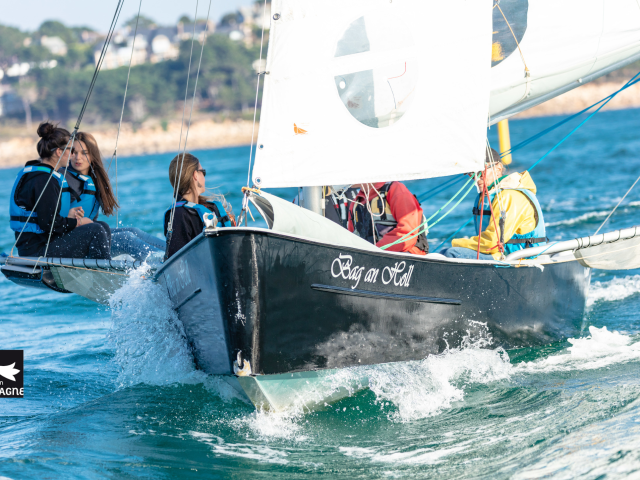
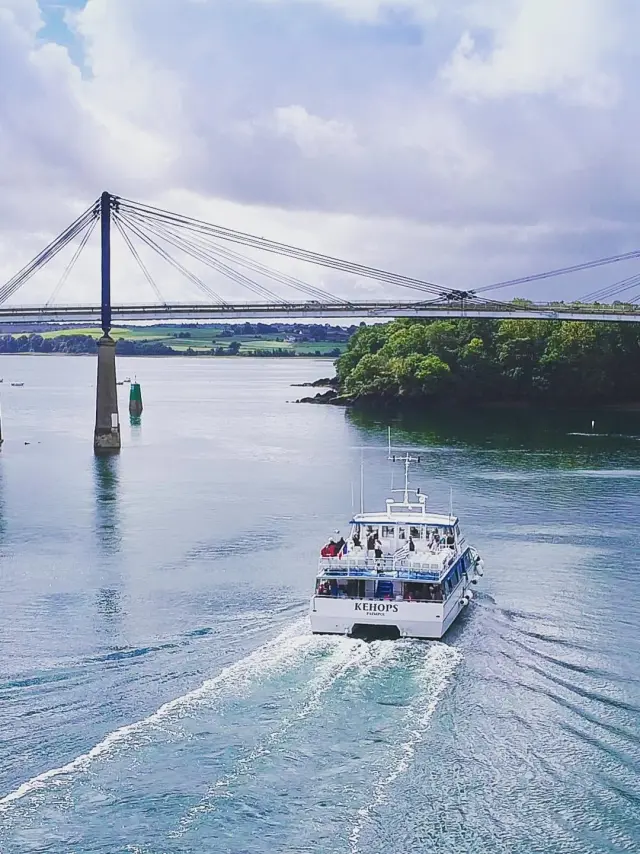
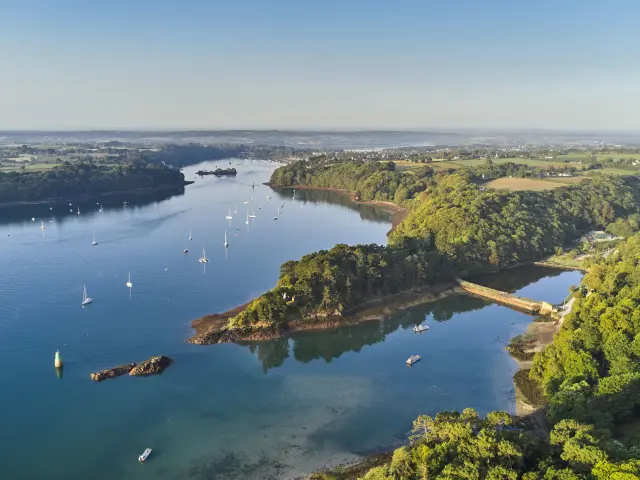
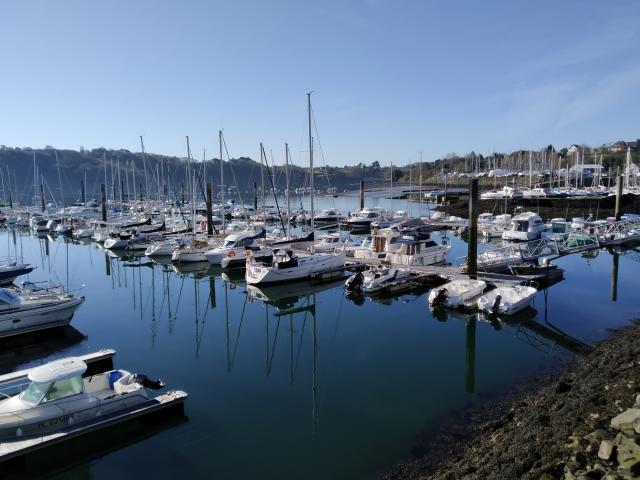
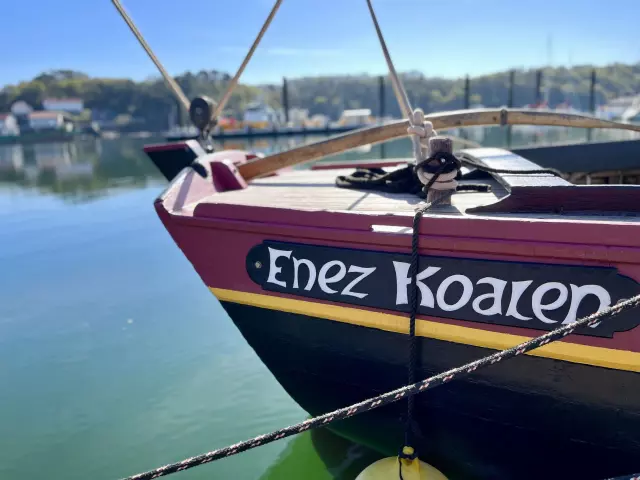
Before you saddle up, why not take advantage of being in Lézardrieux to take to the waves? Head to the town’s port for a voyage of discovery along Brittany’s coastline. And to better understand your surroundings, opt for a guided tour aboard the Passeur du Trieux. It will reveal the hidden treasures of the estuary and the river, and leave you with a head full of memories. And in fine weather, it’s even better. Something to think about over and over again!
*A type of religious architecture originating in Brittany, particularly in the Trégor region.
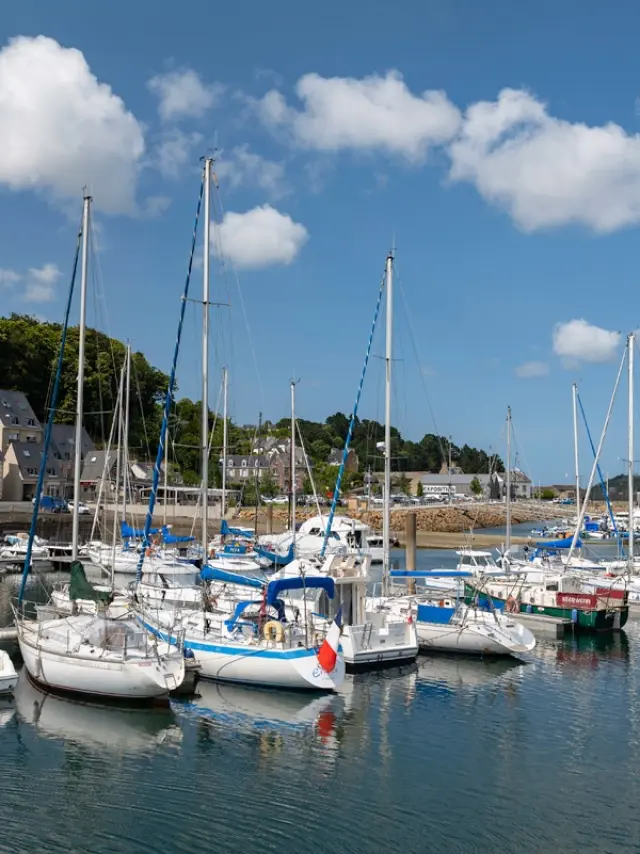
The port of Lézardrieux (Côtes-d'Armor)Presqu'île de Lézardrieux
|
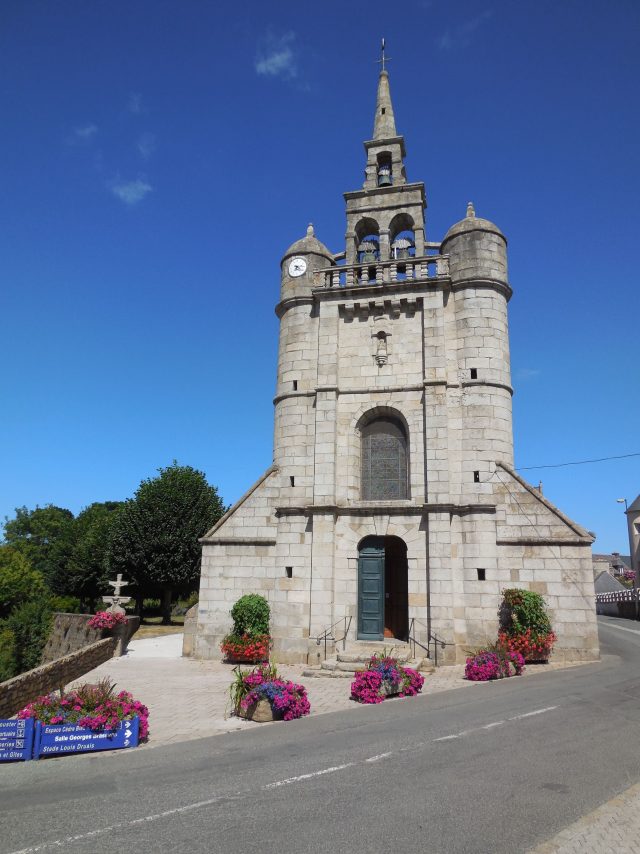
Lezardrieux church
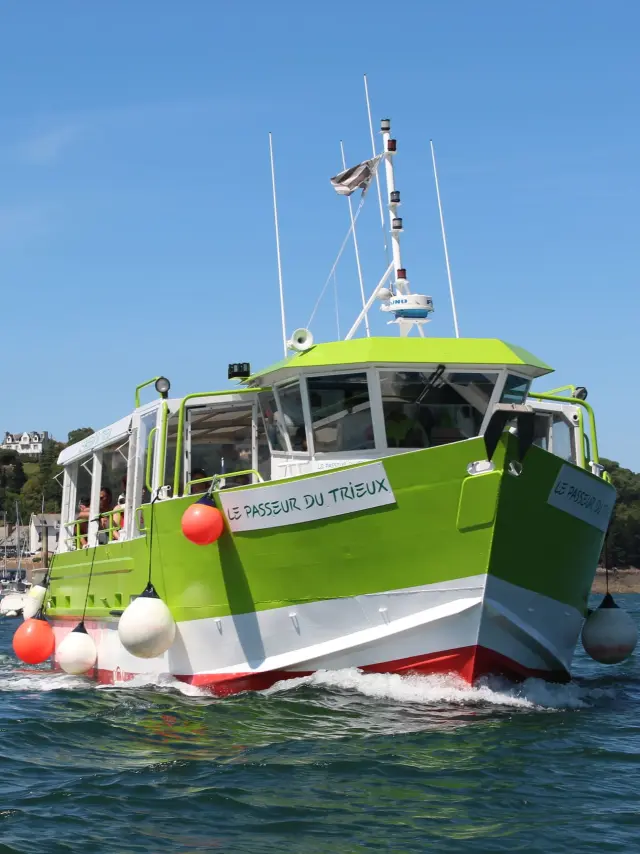
Le Passeur du Trieux
|
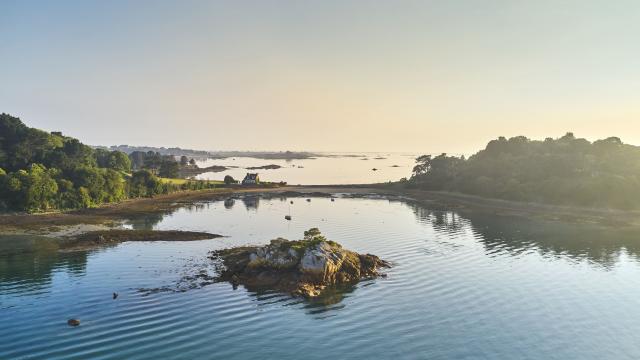
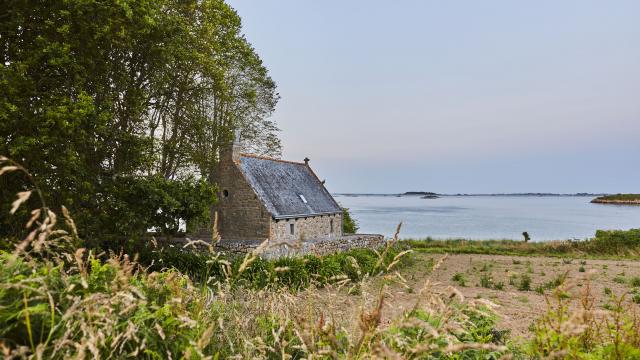
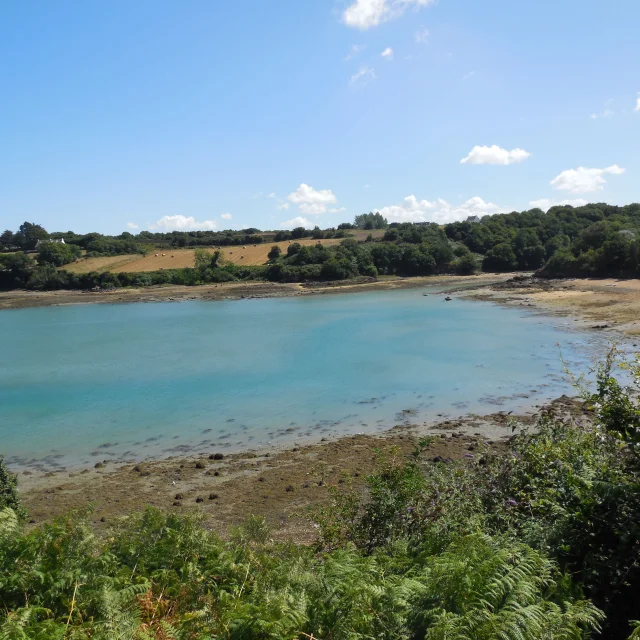
Pommelin Bay
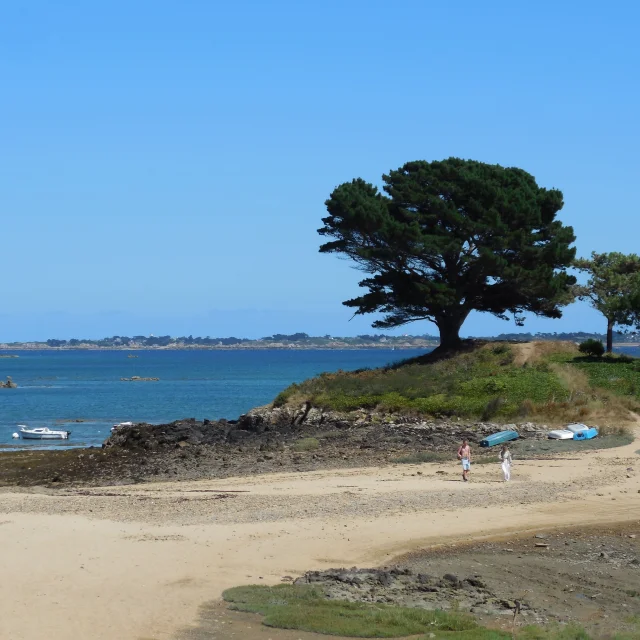
Porzh Guyon
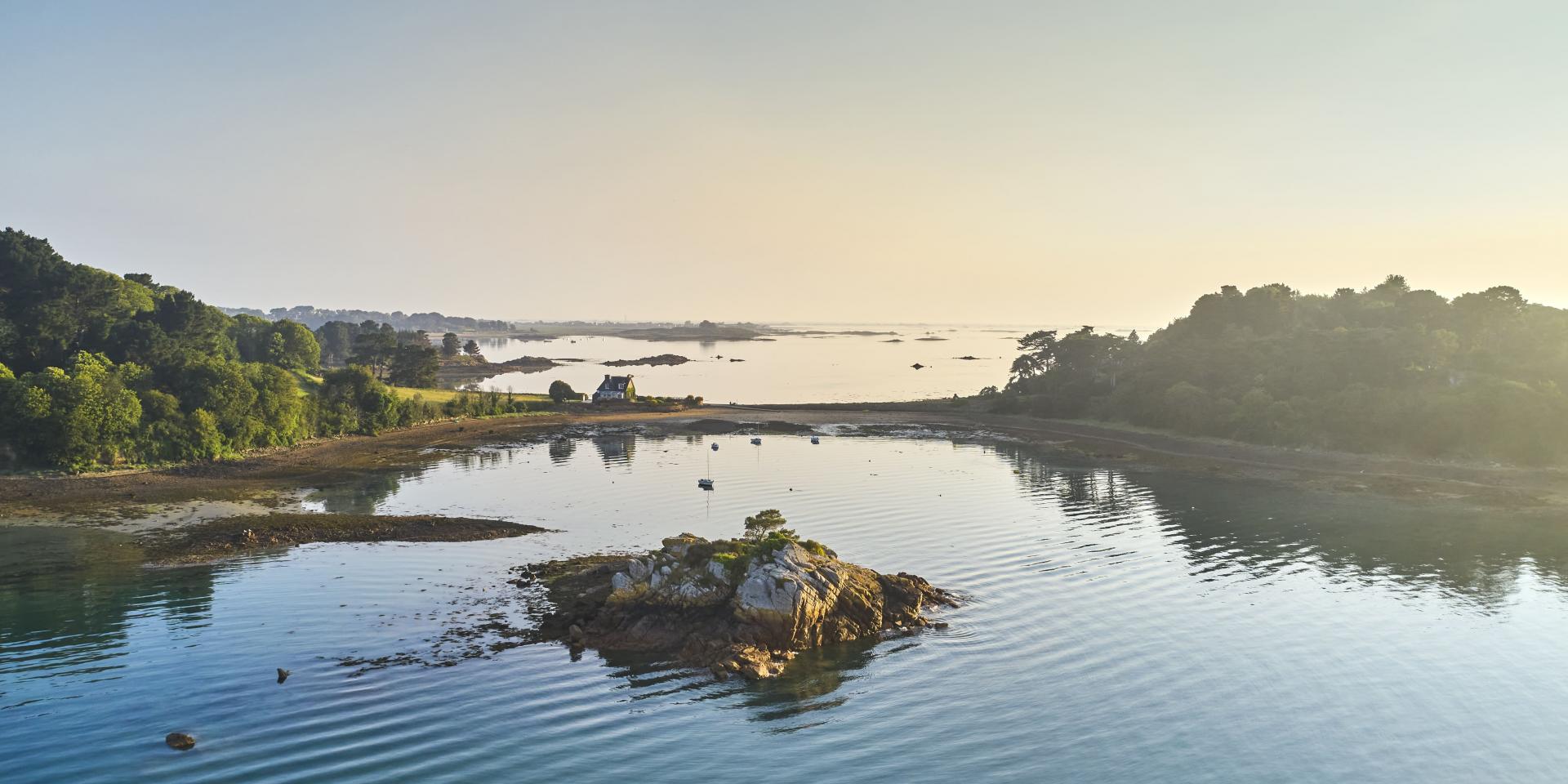
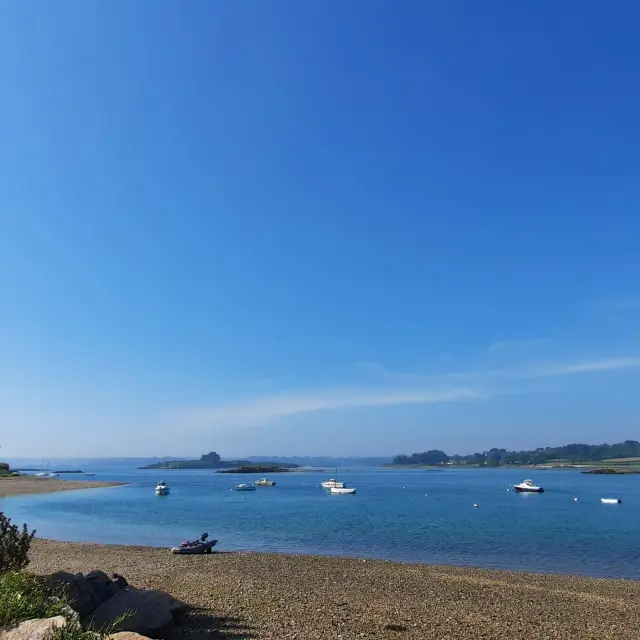
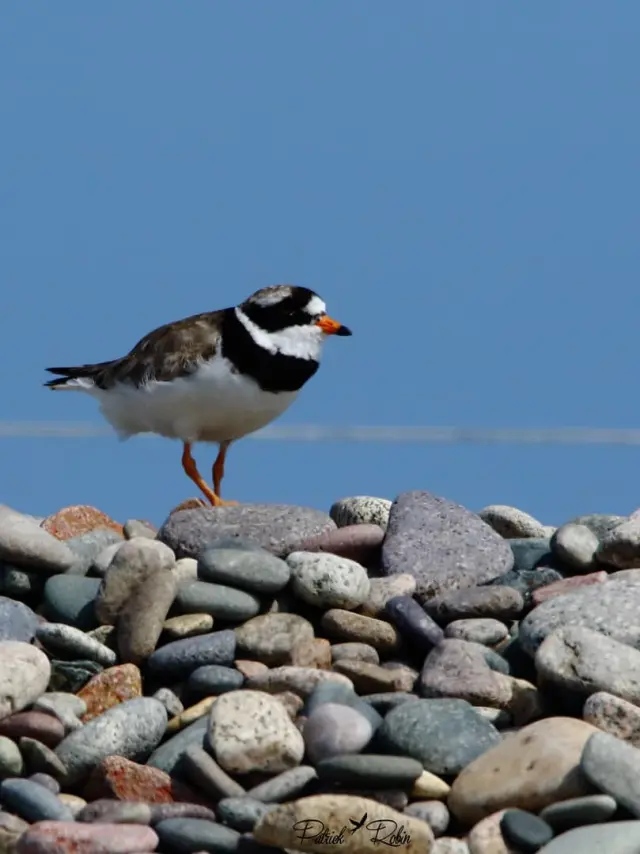
Welcome to Brittany’s oyster-farming paradise! After just a few kilometres, when you join cycling route no. 5*, you’ll reach the coast at the Baie de Pommelin in Lanmodez. In your sights (we hope you haven’t forgotten it in your luggage!): a vast foreshore serving as a refuge for seabirds, such as waders, which come to the heart of the bay to feed and find shelter. And after a few metres, you’re in for a surprise when you reach Porzh Guyon! You can see the islands of the Bréhat archipelago, as well as the Croix lighthouse, which marks the entrance to the Trieux.
*Cycling Loop No. 5* is a signposted local cycling route that allows you to explore the Presqu’île Sauvage.
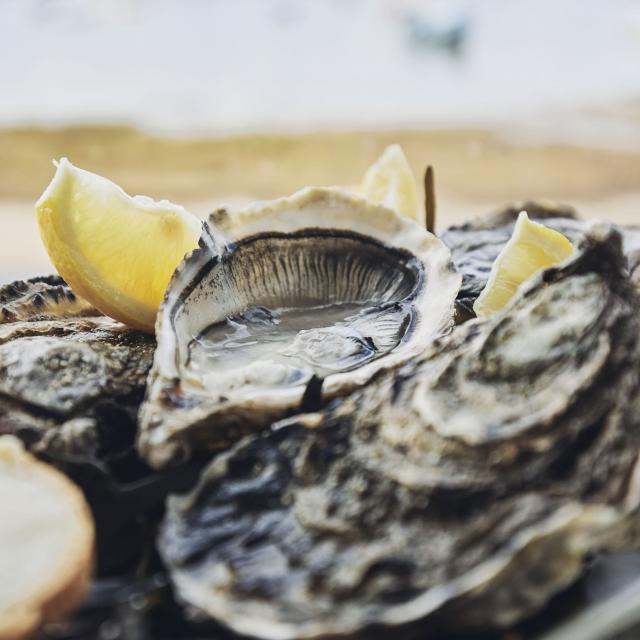
A trip to Brittany without tasting the local oysters is a bit like riding a bicycle without handlebars: unthinkable! Between two pedal strokes, make a stop to taste these iodised products during your trip. In fact, you’ve probably seen where they come from from your bike: many oyster beds are revealed at low tide off Lanmodez, when the water recedes from the mouth of the Trieux. All that’s left to do is grab your shell and enjoy the view of the Bréhat archipelago. A good start to a cycling trip in Brittany, wouldn’t you say?
Please note: the oyster season runs from September to April in Brittany.
Pen Lann
Nomades Cwc 11
|
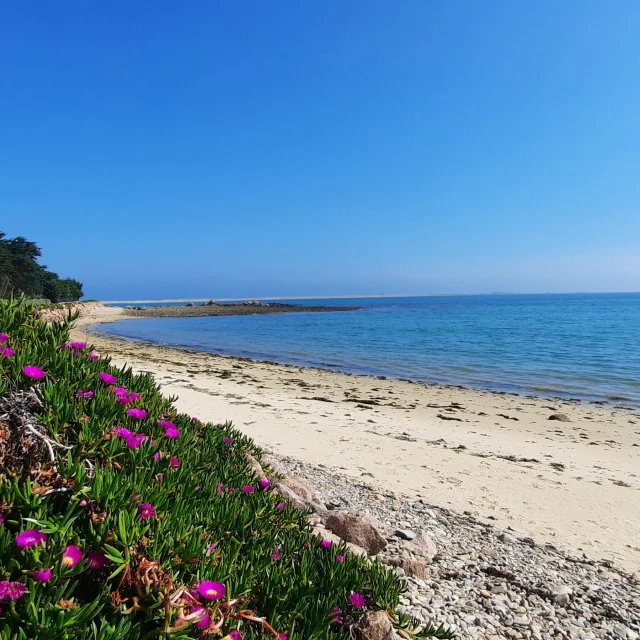
Sillon Noir Beach
Nomades Cwc 40
|
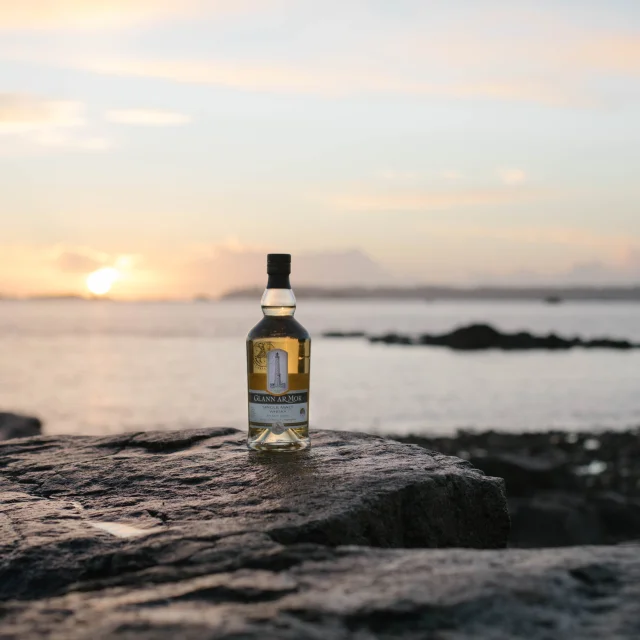
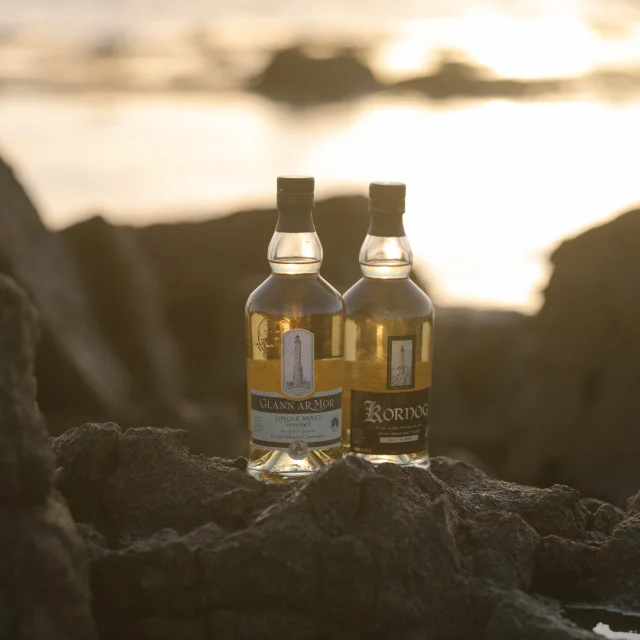
The cycle route continues as far asArmor Pleubian, where you are advised to push on to the pointe de Pen Lan. This is one of the most beautiful viewpoints on the Presqu’Île Sauvage! On one side is a small sheltered bay, while on the other you can see the islands of the Bréhat archipelago and the famous Sillon de Talbert. Keep your eyes peeled for the lighthouse of Les Héaux de Bréhat, at the tip of the furrow. This is also where you’ll find the Celtic Whisky Distillery, one of the most famous in France! Put the bike down for a visit.
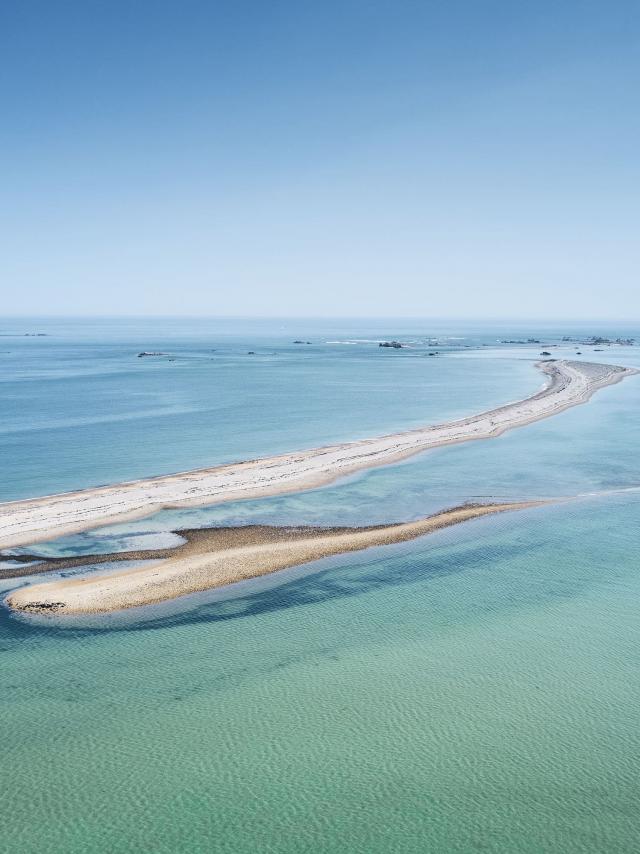
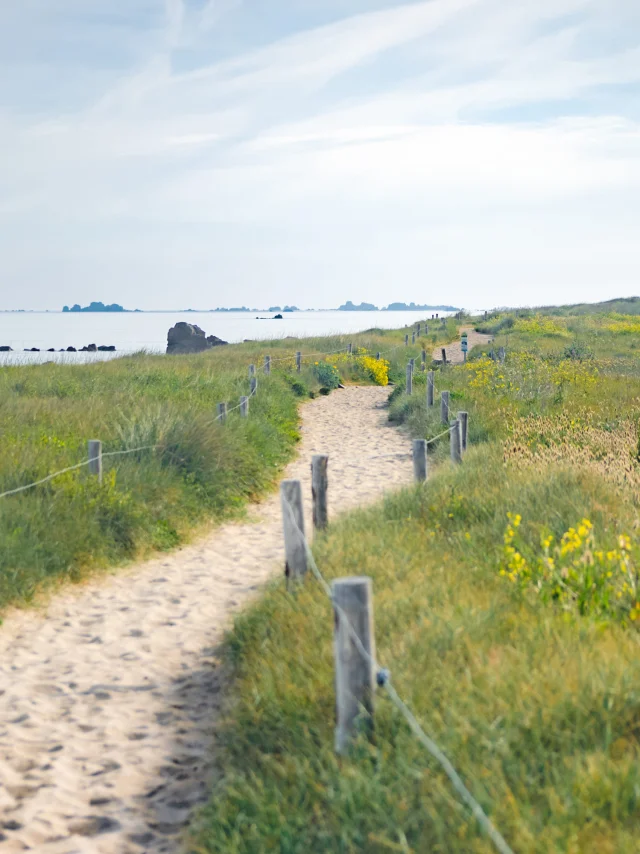
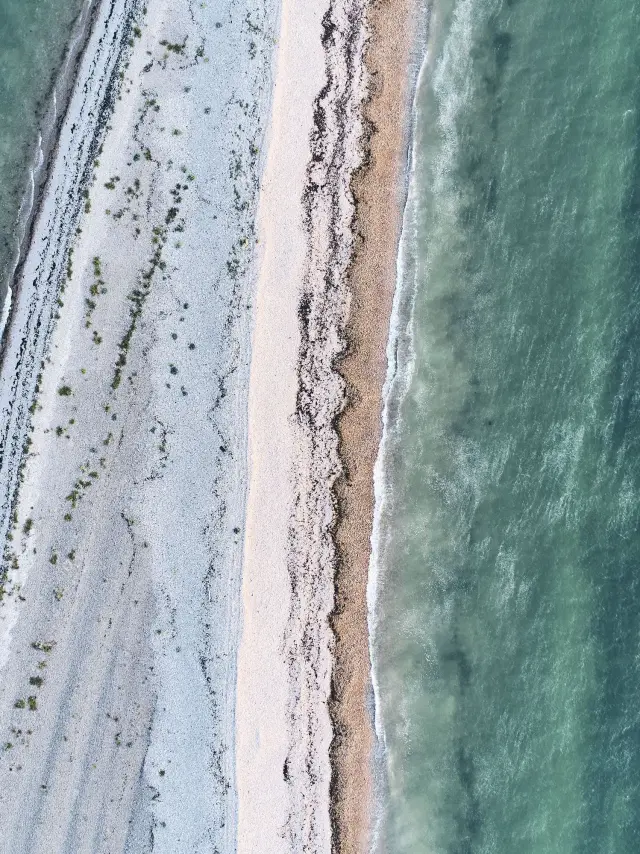
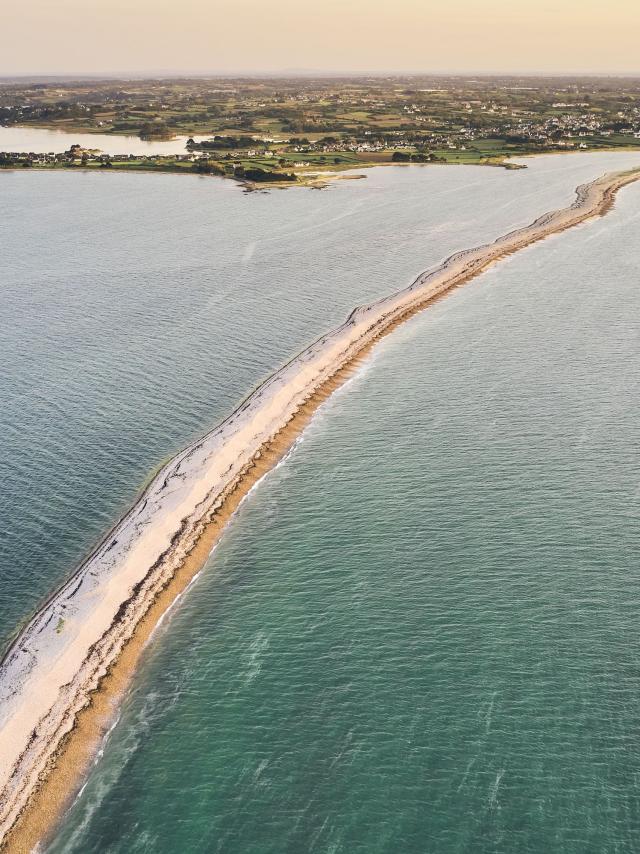
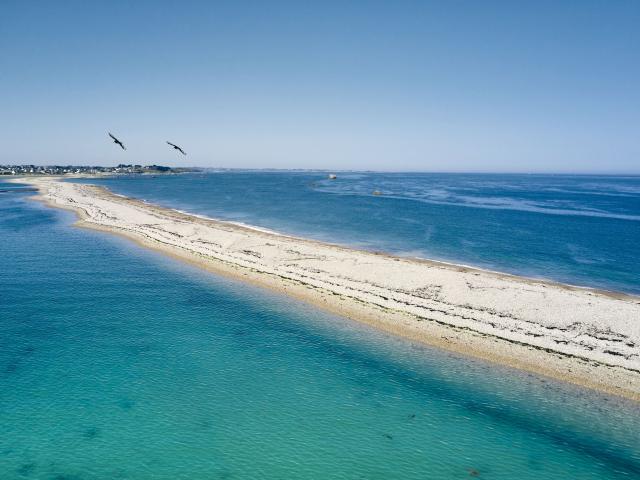
It’s impossible to miss (yes, even from your bike): the Sillon de Talbert is a 3-kilometre-long stretch of sand and pebbles that juts out into the sea. Would you like to get ashore to reach it? Be sure to check the timetable beforehand, as the access routes may be blocked at high tide due to a breach in the water.
This ecosystem is one of the most beautiful stops on your itinerary in Brittany, as it is home to a wide variety of flora and fauna. It’s also a nesting site, so be careful not to crush the birds by walking on the pebbles!
Want to find out more about this unique destination? Then visit the Maison du Sillon!
Sillon de Talbert
|
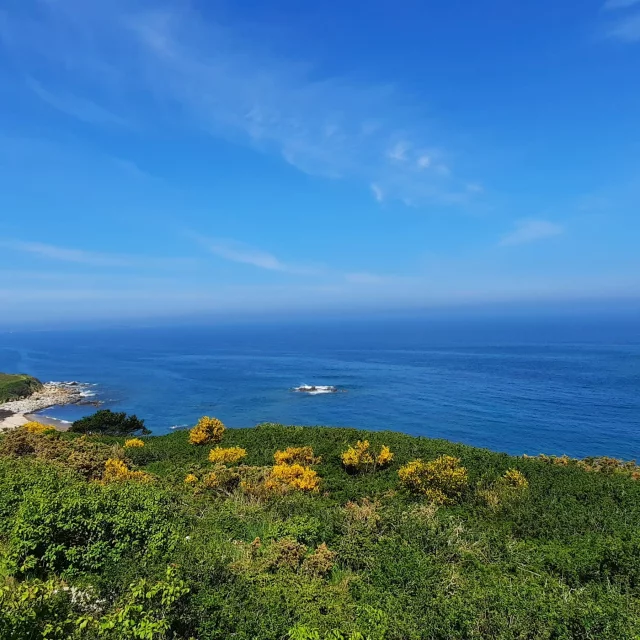
View Creach Maout Pleubian
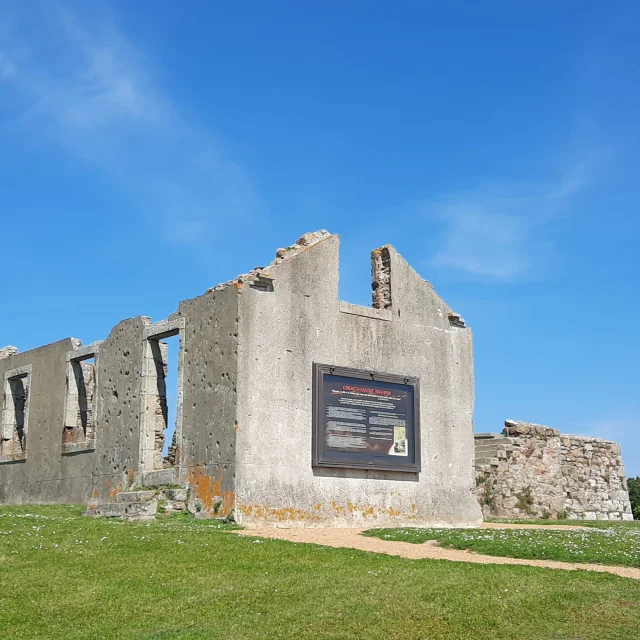
Former Semaphorme Creach Maout
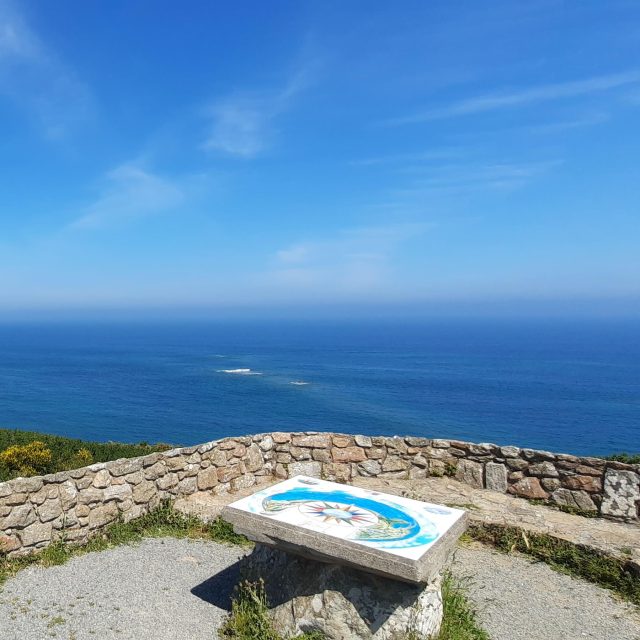
View of Créac'h Maout
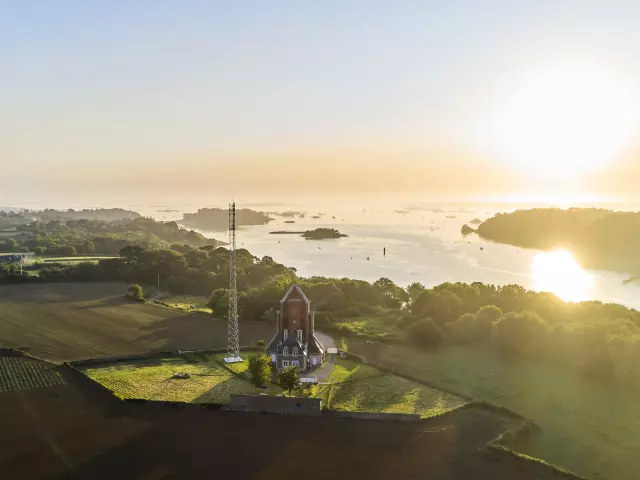
After a short climb (thanks to the electric assistance), you’ll reach the old Créac’h Maout semaphore, witness to the resistance on the peninsula during the Second World War. It was also the scene of a massacre in 1944.
As well as being a place of remembrance, it also offers an impressive panoramic view of the coastline. Take a look at the panoramic table, which shows you Plougrescant and the islands of the Bréhat archipelago, as well as various landmarks and lighthouses. A stopover that’s as historic as it is sensational.
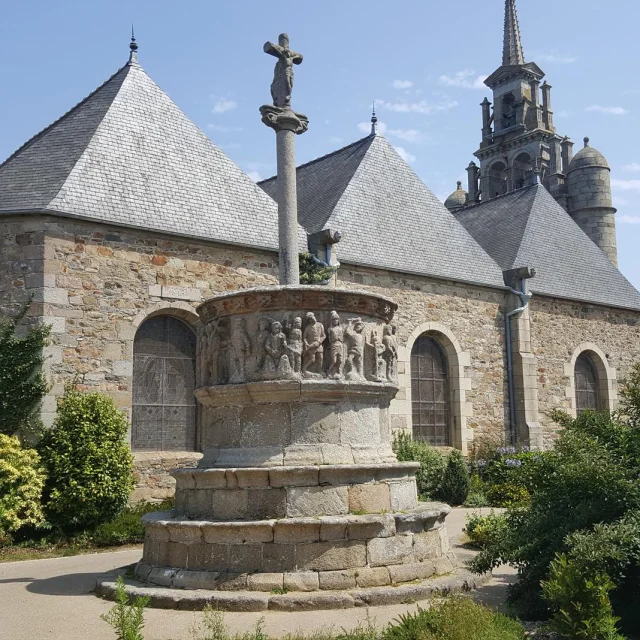
The journey continues! You’ll soon reach the town of Pleubian from the Kermagen beach, leaving the sea spray and vast stretches of sand behind you. Pass by the chapel of Brestan to reach the church of Saint-Georges, where a curiosity awaits you: a 15th-century pulpit. This granite gem seems to stand guard over the village square.
A closer look at this stone monument quickly reveals its historical function: it is in fact a small platform used by the priest to deliver his sermon. The only difference is that it is outside! In the past, during the great pardons, the nave of the church was no longer large enough to accommodate the faithful, forcing the clergy to address the crowd massed on the forecourt. This is quite typical of Brittany.
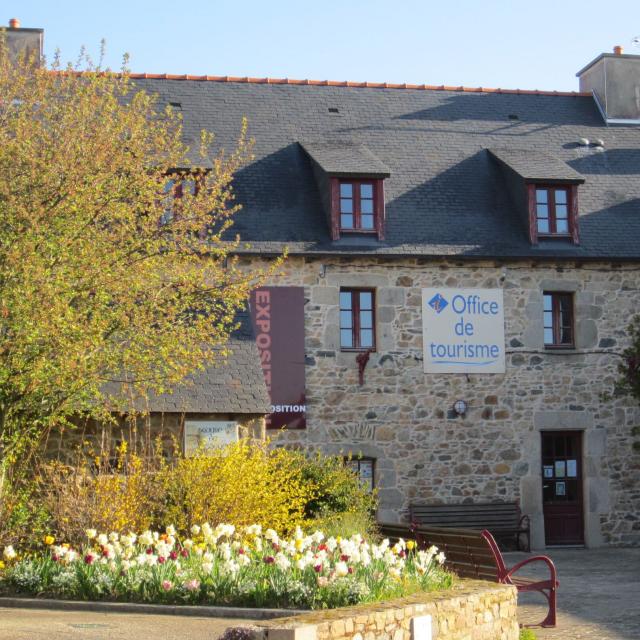
Bureau d'Information Touristique de Pleubian
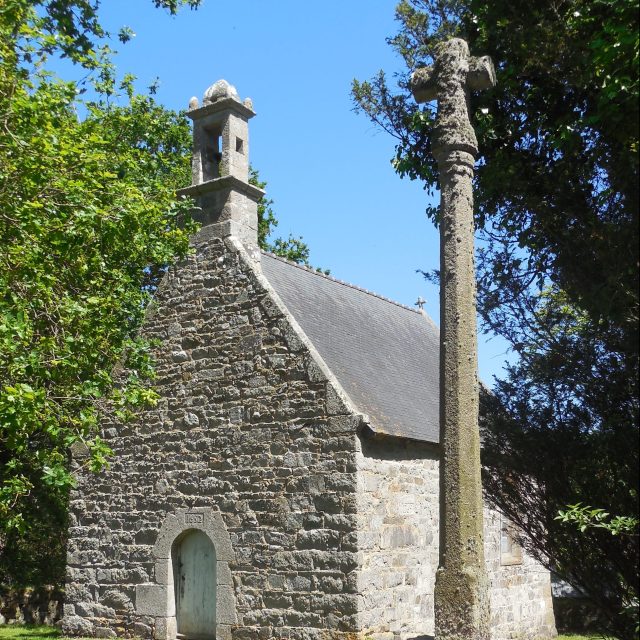
Chapelle De Brestan
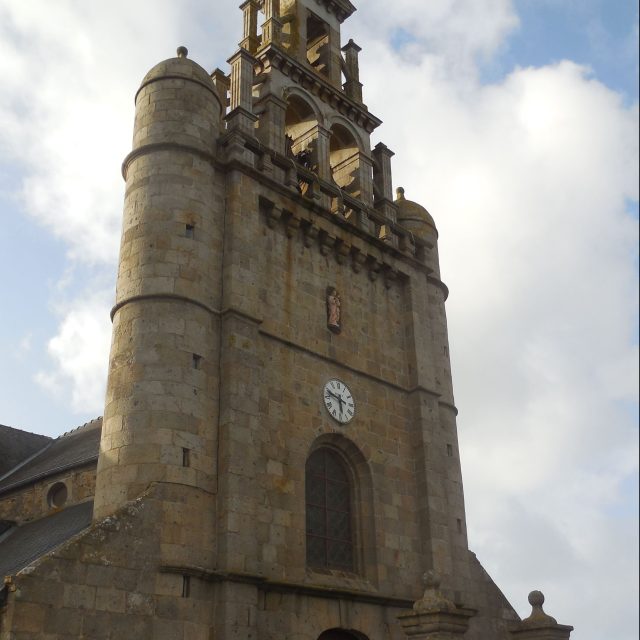
Church facade Pleubian
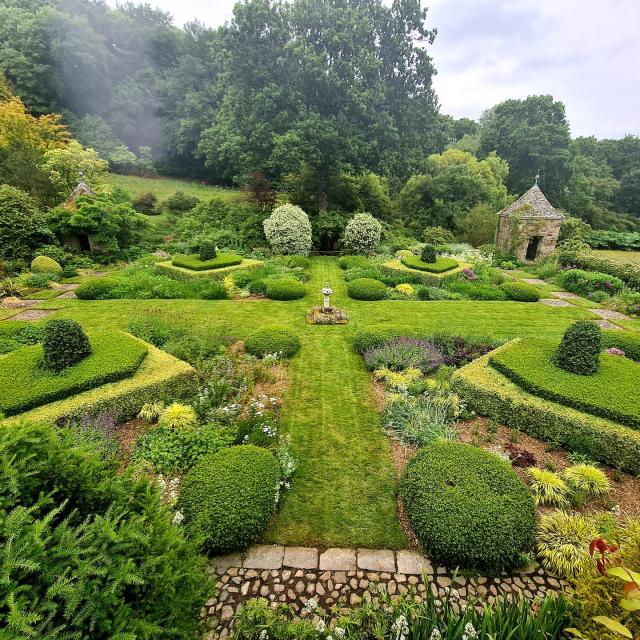
ou-partir-en-bretagne-jardin-kerdalo
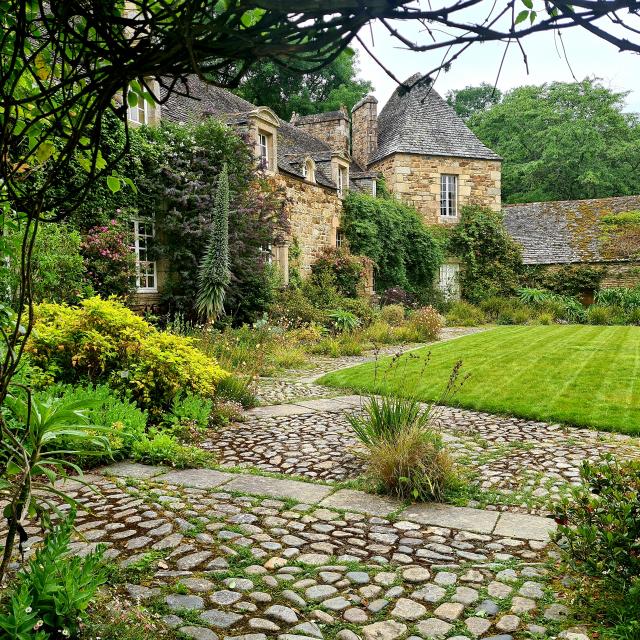
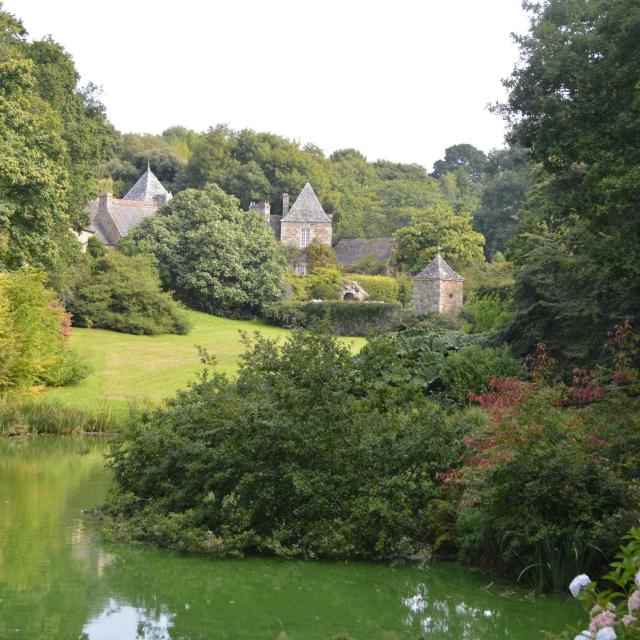
It’s time to leave loop 5 and rejoin the main La Vélomaritime® route. This is the sign that you are approaching the Jaudy estuary, and are about to enjoy a stopover in the green (for a change from the coastal blue!). This new course takes you to a haven of serenity where vegetation reigns supreme.
Here are the Jardins de Kerdalo! Listed as one of Brittany’s outstanding parks and gardens, this vast estate stretches around a manor house to the edge of the estuary. This world garden is brimming with botanical treasures, with species from France and elsewhere: it’s the perfect romantic setting for those who come to cycle the Pink Granite Coast as a couple.
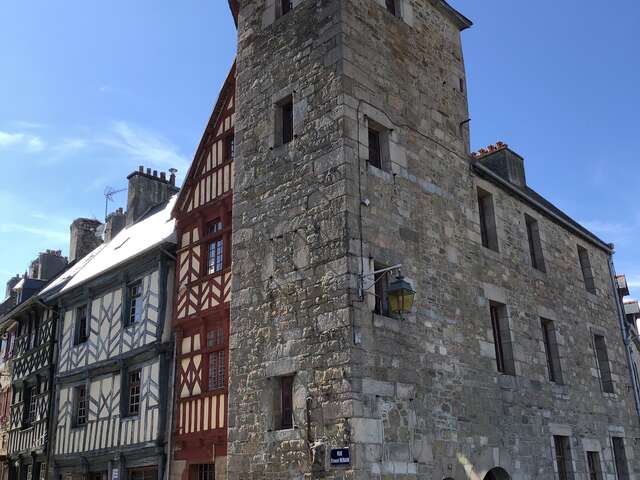
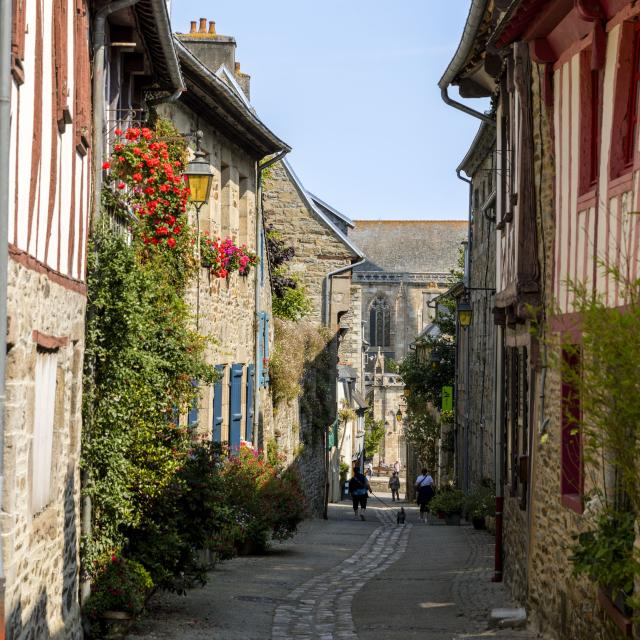
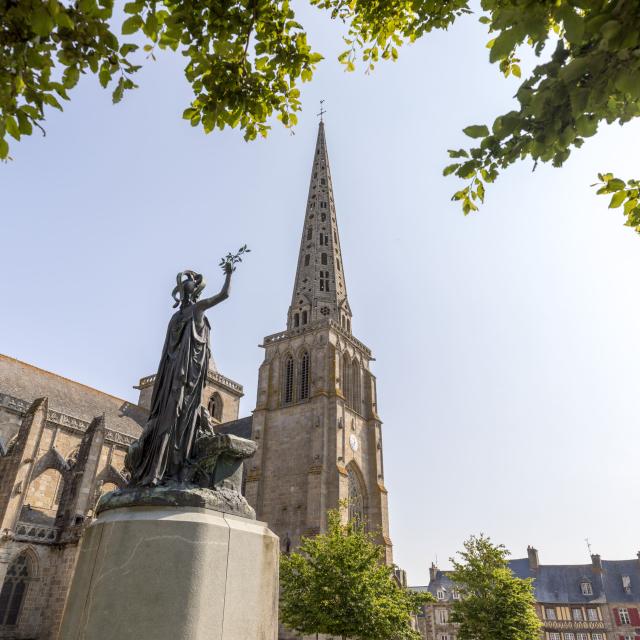
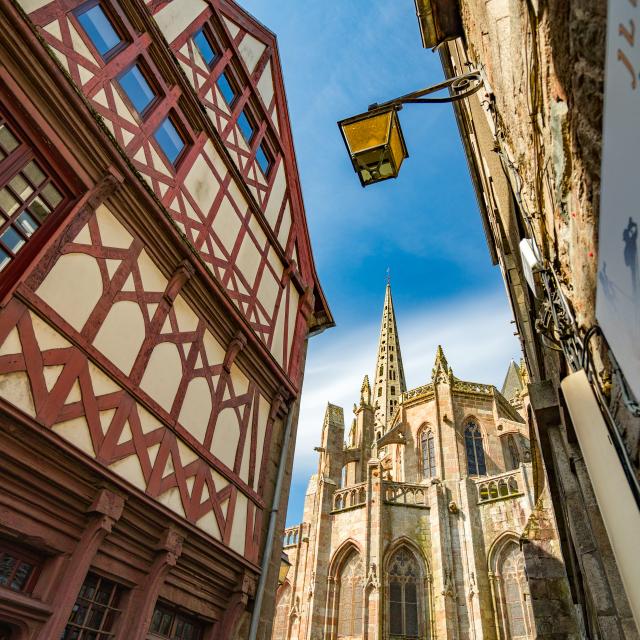
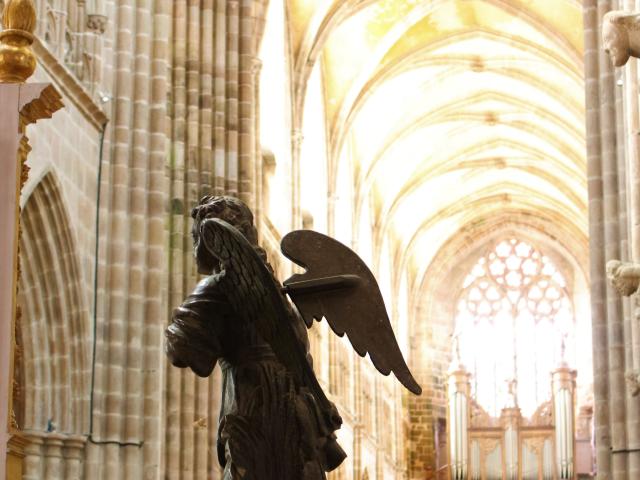
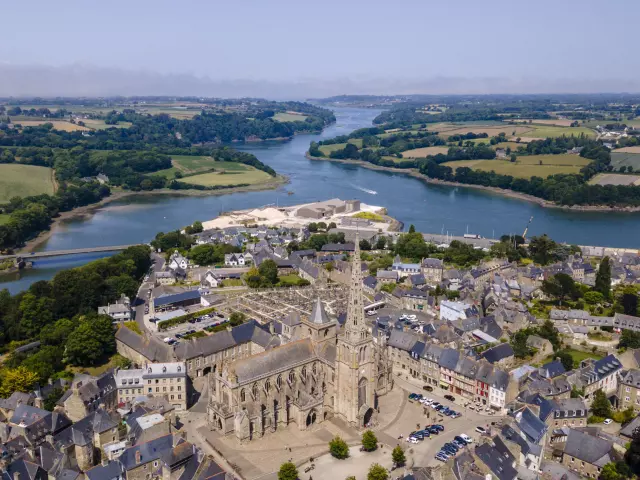
This is (already) the end of your itinerary! Crossing the Jaudy over the Canada Bridge, you reachthe Petite Cité de Caractère® of Tréguier, set on the banks of the river. Go up the rue Ernest Renan from the port, and you’ll reach the Place du Martray, where the cathedral of Saint Tugdual and its remarkable adjoining cloister are enthroned.
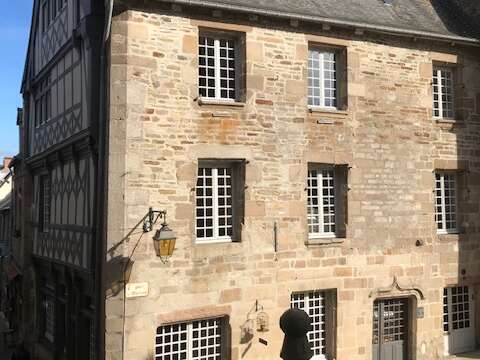
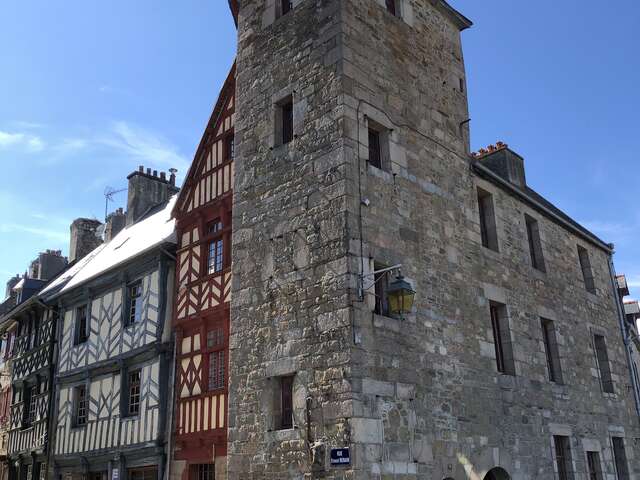
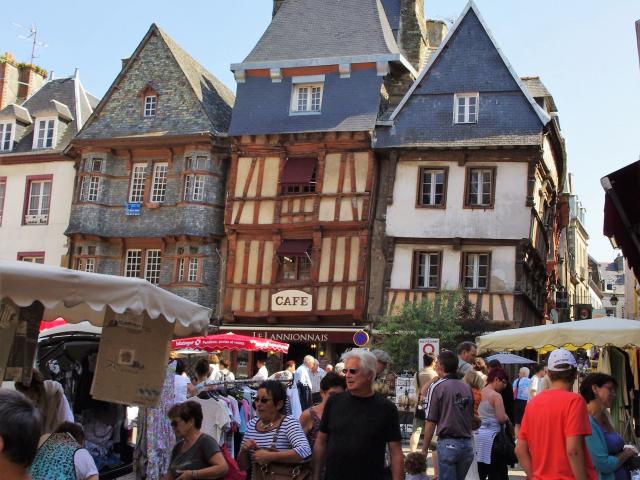
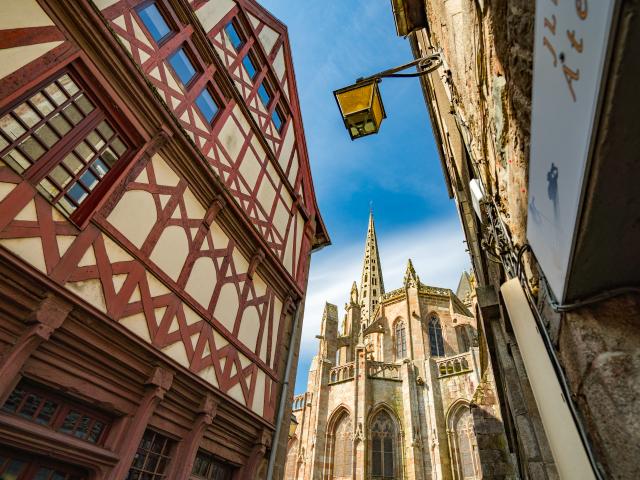
The medieval atmosphere of the timber-framed houses invites you to slow down and savour the charm of the former capital of Trégor. All that’s left for you to do is swap your pedals for trainers and stroll through the narrow streets of Tréguier… Take advantage of this gentle way of life to recall your fondest memories of the road. And perhaps plan your next cycling trip in Brittany? There are so many other coasts and secrets to explore.

Cloitre De Treguier 1
|
Ruelles Treguier Studio Jezequel 4
|
Cathedrale St Tugdual Studio Jezequel 3
|
Thibault Poriel (1)
Vélektro le vélo facile
|
Beach Tregrom 74
|
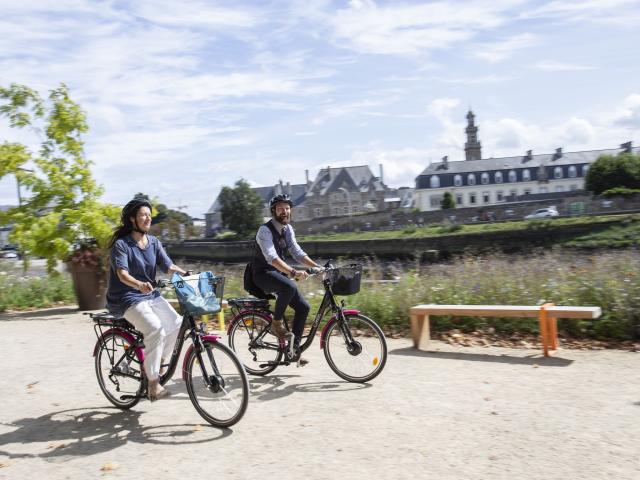
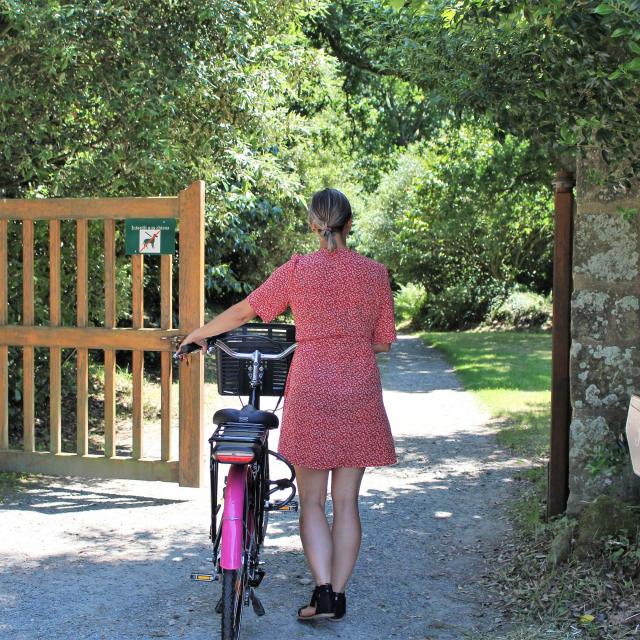
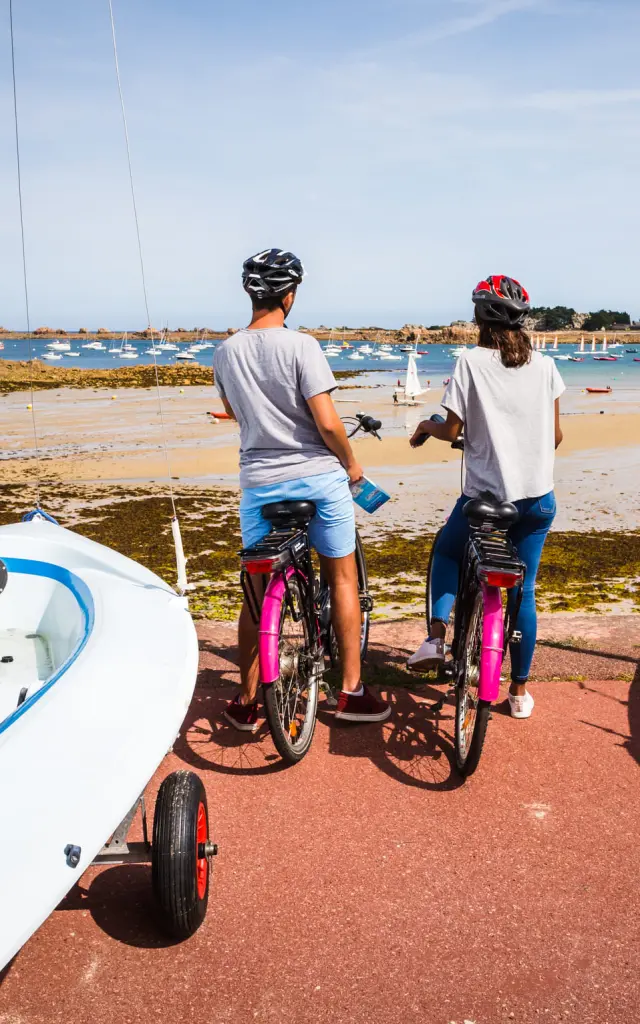
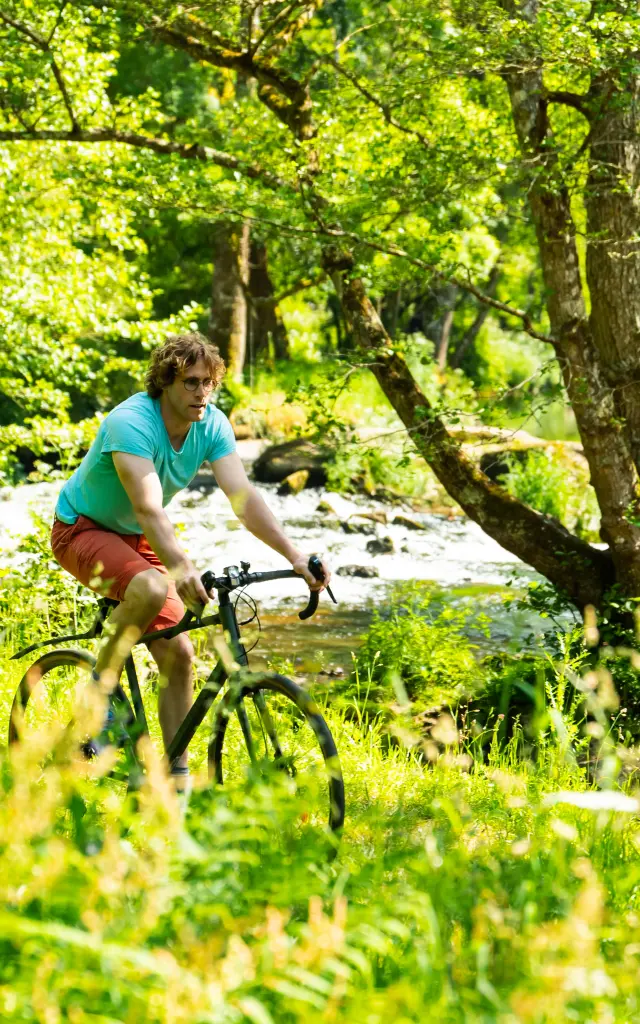
Hire a bike and explore the coastline in total freedom! If you want to pedal along La Vélomaritime®, don’t you have to have a bike? Whether you opt for electric assistance, a mountain bike, a VTC, a tandem or even a cargo bike, find out more about the bike hire companies on the Pink Granite Coast, who have bikes to suit all your needs.
Visite Guidee De Treguier Yann Josselin 24
|
Treguier Studio Jezequel 2
|
Thibault Poriel (1)