The eclipse begins on the Pink Granite Coast inLe compte à rebours est terminé !
JoursJour
HeuresHeure
MinutesMinute
SecondesSeconde
DSC_0332
|
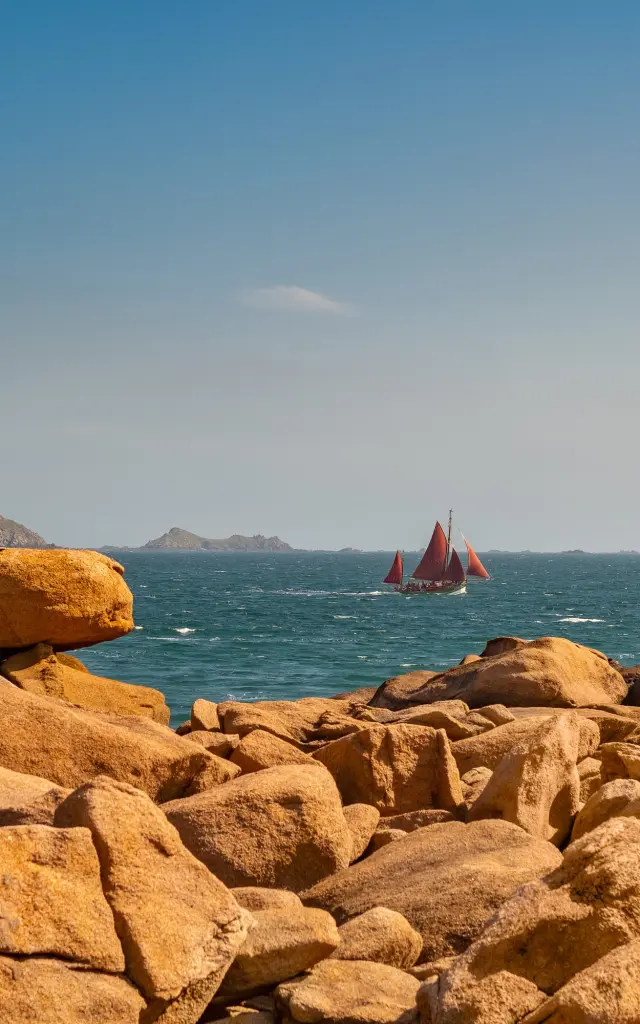
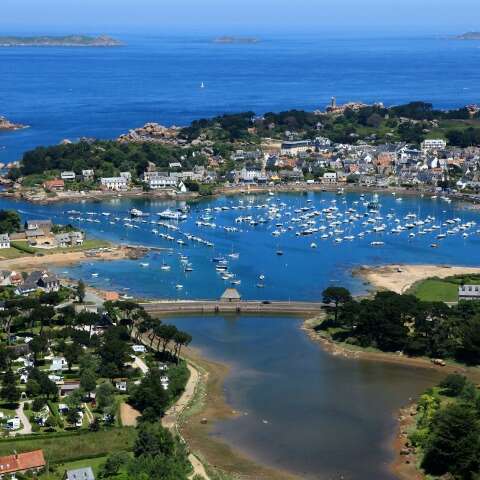
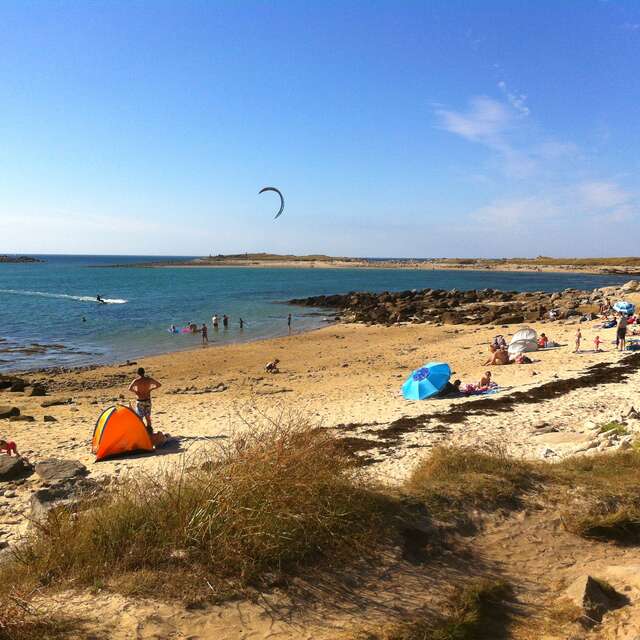
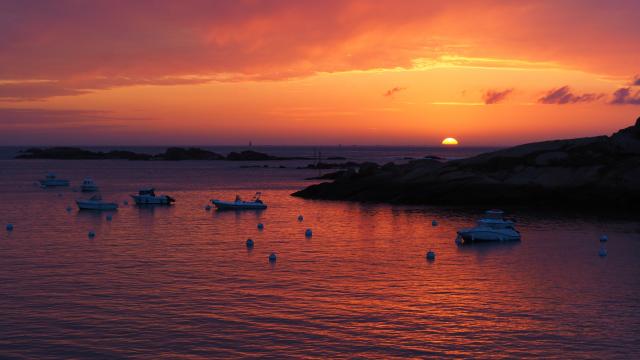
Choosing the Pink Granite Coast for the eclipse on 12 August 2026 means treating yourself to the most spectacular of natural theatres. Here, the event isn’t just to be seen in the sky; it’s reflected in a turquoise sea and sets the rugged coastline ablaze.
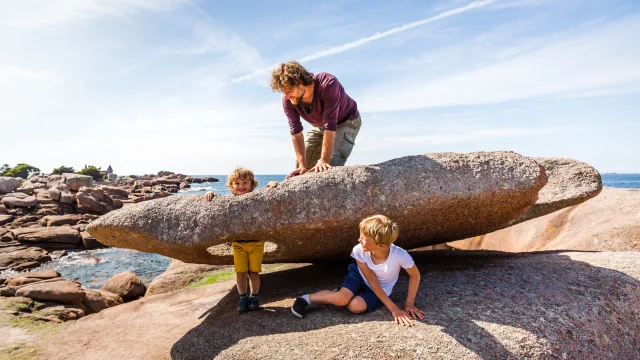
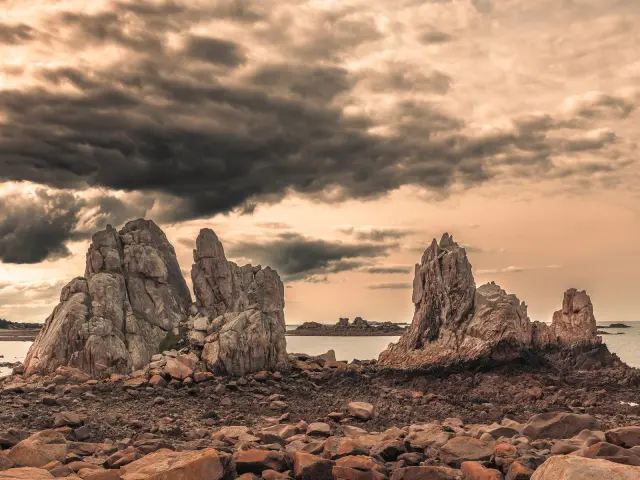
When the moon obscures the sun, the twilight will bathe our famous granite chaos formations. These giants of pink stone, sculpted by the elements, will then take on coppery hues. Facing the completely clear western horizon, you’ll experience far more than just an astronomical phenomenon: a total sensory immersion at the heart of a legendary landscape.
The most legendary spot
Trégastel
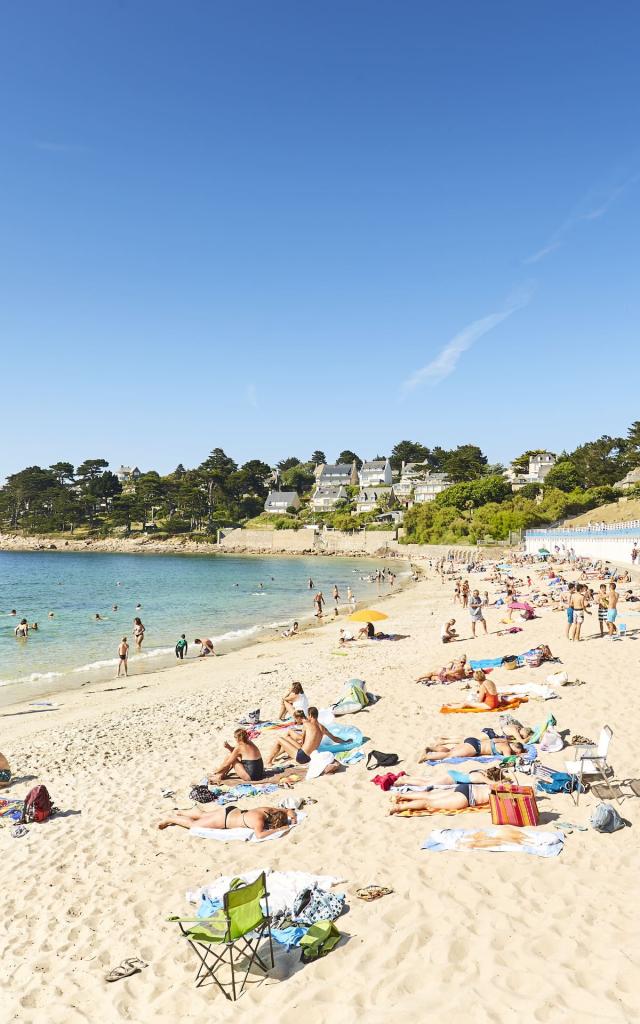
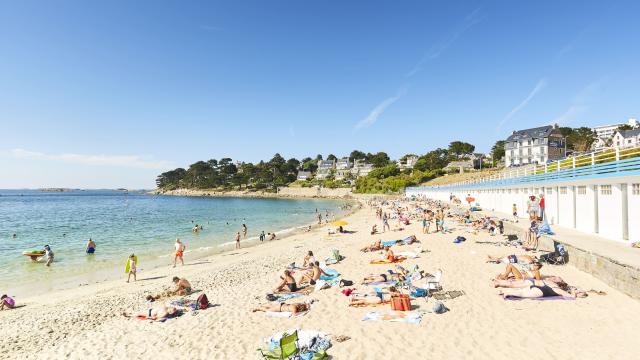
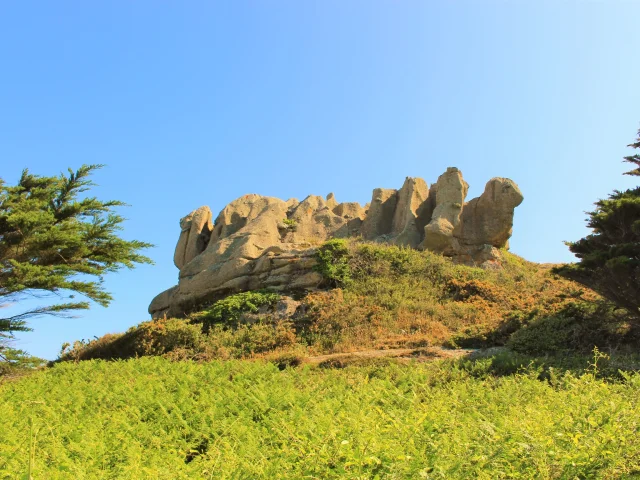
This large pink granite rock has towered over Grève Blanche beach for millennia. Its shape resembles a crown – that of King Gradlon, King of Cornouaille. On 12 August, opposite this headland overlooking the sea, the moon will cast its own crown over the sun. King Gradlon’s viewing platform offers a magnificent panorama of the seaside resort of Trégastel, the sea and the rocks stretching as far as the eye can see. It’s just a few minutes’ climb from the GR34 – sturdy footwear is recommended – and the spectacle of the century is all yours, with the added bonus of Grève Blanche beach below to round off the evening.
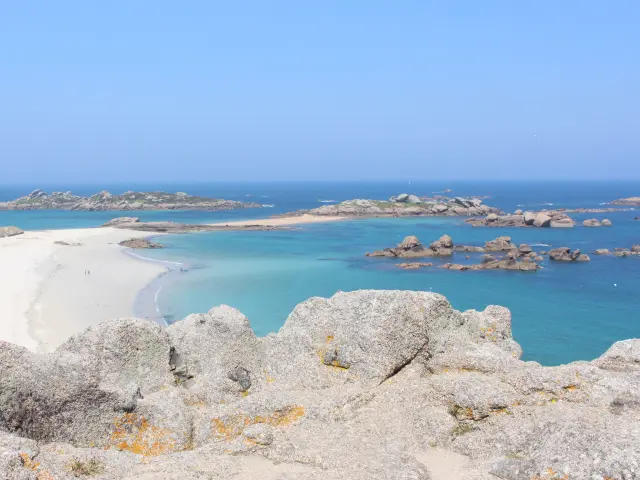
The setting sun’s reflections dance on the crystal-clear waters of this paradise beach.
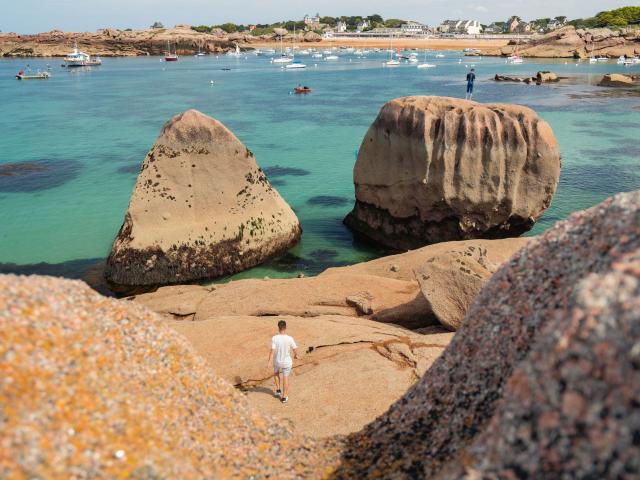
Why do we love it?
To witness a celestial phenomenon against a backdrop shaped by Breton legends.
The wildest spot
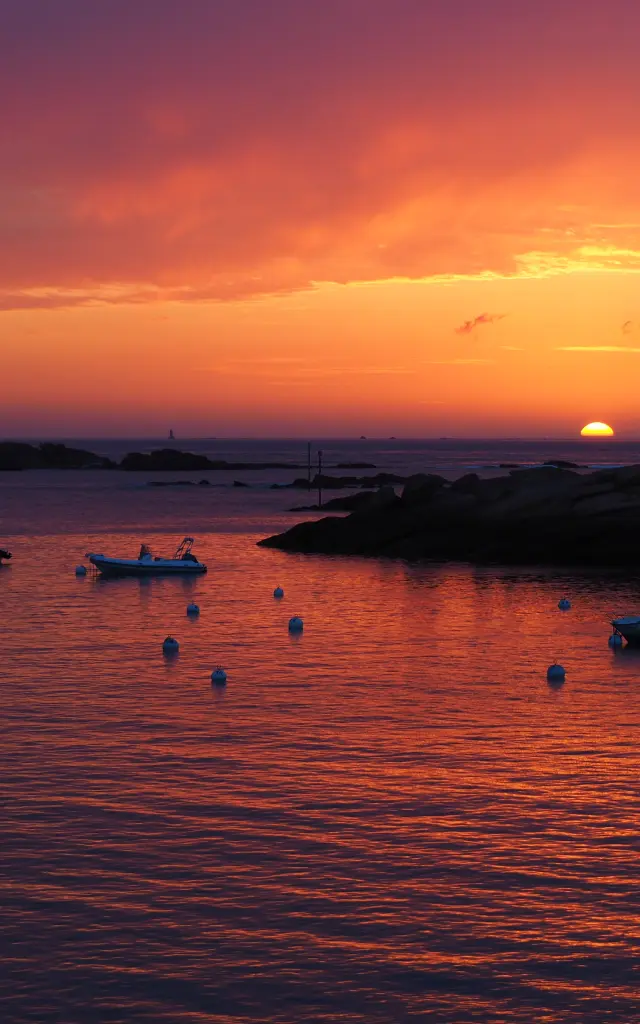
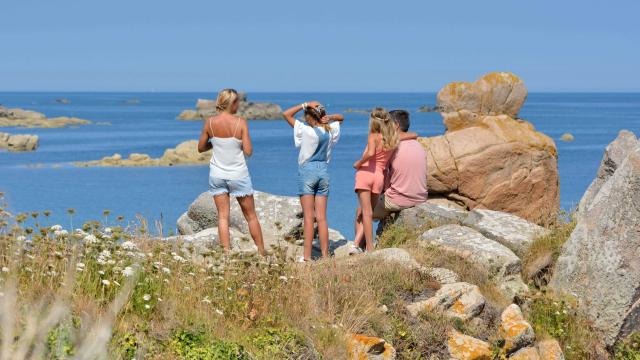
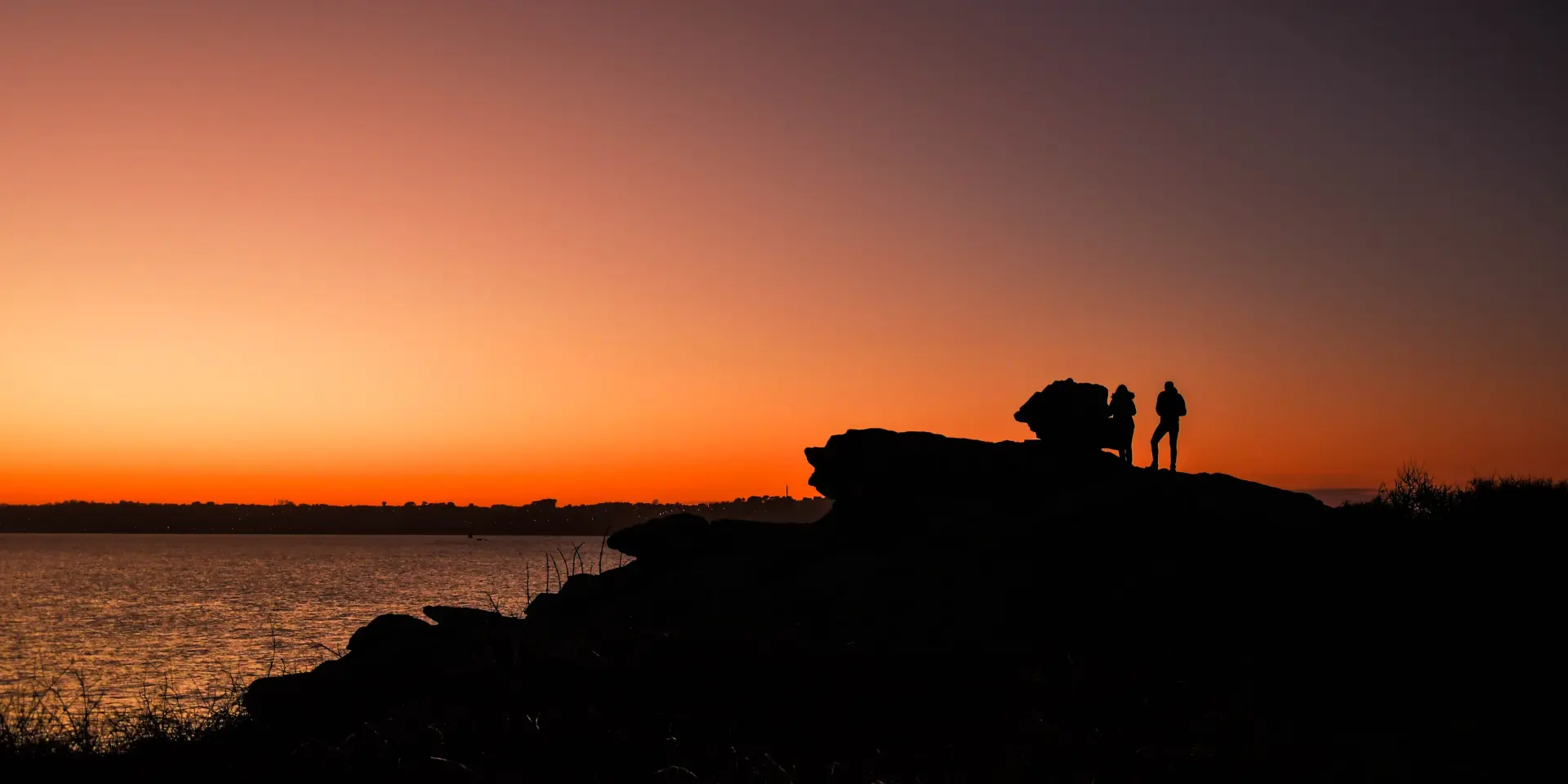
On the rugged coastline of Plougrescant, Pors Scaff embodies the way Breton landscapes seem to change character with every passing hour. This remote corner of the world, facing an unobstructed horizon, will be the setting for the spectacle of the Moon edging around the sun’s disc. Rocks sculpted by the elements, moorland right by the sea, secluded coves: here, the eclipse will be experienced in a mineral silence that few other sites in the region can offer. Arrive before 7 pm to choose your rock — some bear a face, a crown, or a couple of lovers facing the setting sun. Tonight, there will also be a Moon between them.
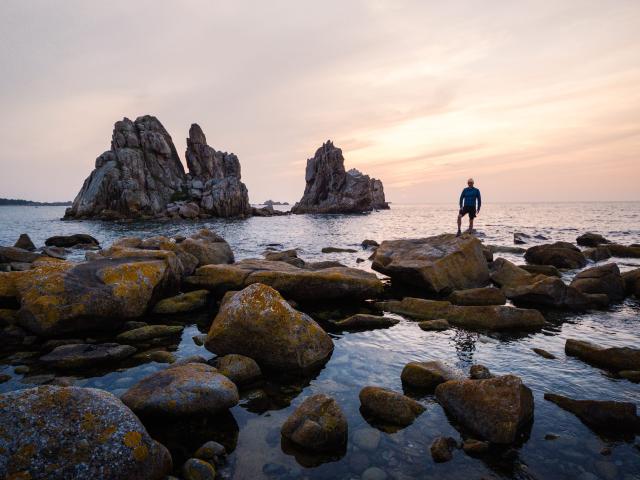
Sunset Pors Scaff Simon Pouyet.jpg
|
Did you know?
This very same landscape was used as the setting for the film *A Very Long Engagement*, starring Audrey Tautou!
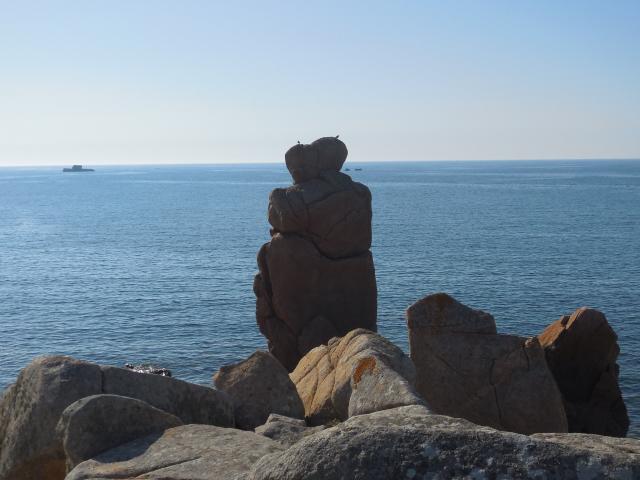
rando circuit de Pors Scaff
|
Pointe du Dourven
The spot with the best views
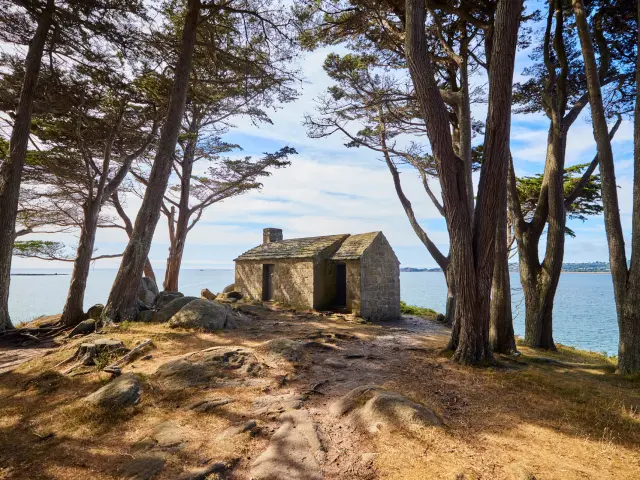
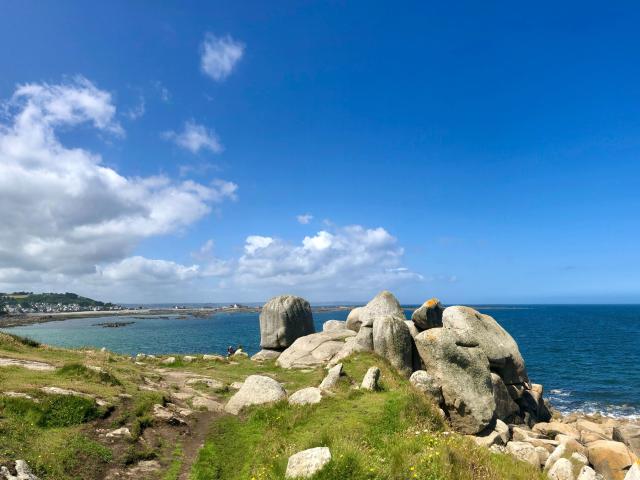
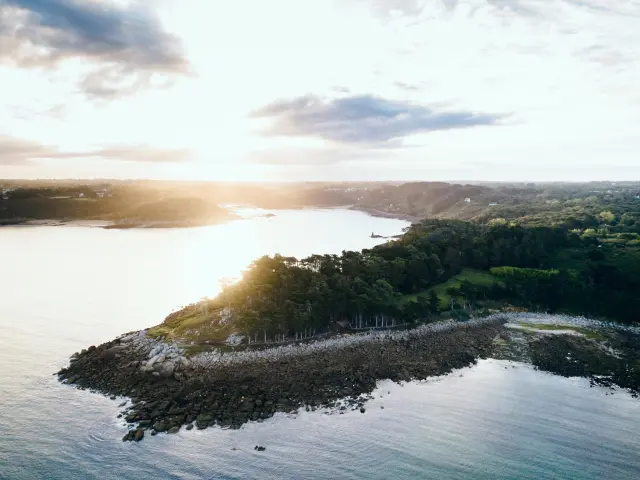
Dourven means ‘rustling stone’ in Breton. On the evening of the eclipse, this 43-hectare headland will rustle in a different way: that of a sky in the process of changing. At the tip of this rocky outcrop, which marks the southern entrance to the Léguer estuary, the view opens out widely over Lannion Bay and out to sea, due west — exactly where the sun will begin its descent at the eclipse’s peak around 8.15 pm. Granite outcrops, maritime pines, coastal grassland: the setting is every bit as impressive as the event itself. And should the eclipse require a witness, the estate’s contemporary art gallery and its landscape artists would no doubt appreciate it too.
Pro tip
The large grassy area means you can set up your observation equipment in complete safety.
The most astronomical spot
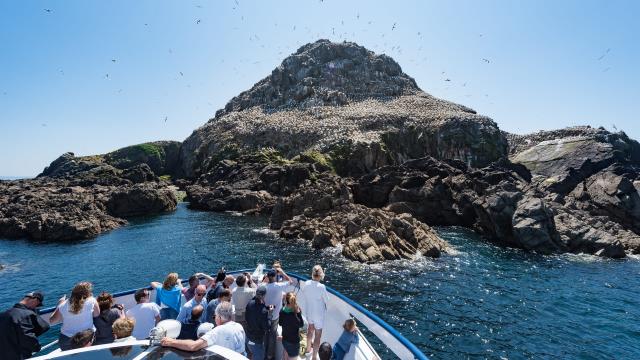
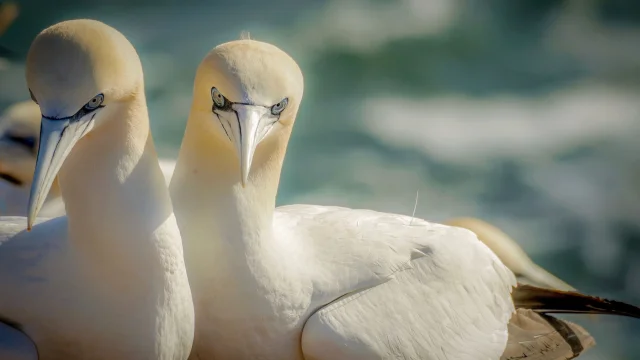
There is a certain logic to watching an eclipse from Castel Erek. This granite headland on Île Grande, right next to the LPO Station and just a few minutes from the Brittany Planetarium, is one of the few places on the Pink Granite Coast where you can take in, in a single glance, the Sept-Îles to the east, Milliau Island to the west and the Triagoz archipelago to the north. A 180° panorama over a clear sea horizon, facing west: it’s hard to imagine a better spot from which to follow the dance of the moon and the sun. The seabirds that frequent the area may well be the first to sense the light changing, right from the start of the eclipse.
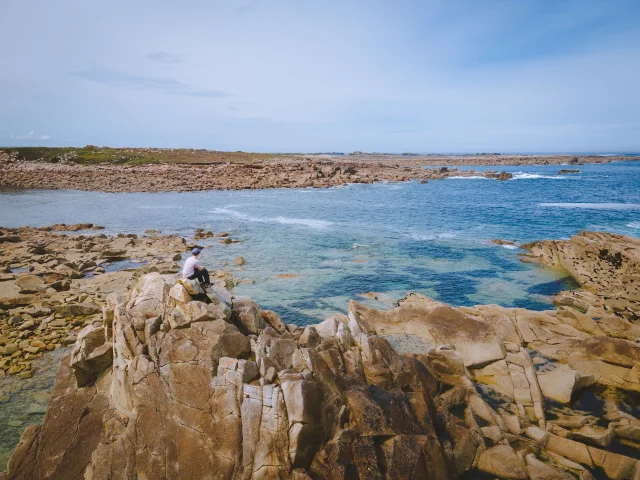
Ile Grande
|
Did you know?
The alignment of the moon and the sun will cause a spring tide. Two phenomena, a single celestial mechanism.
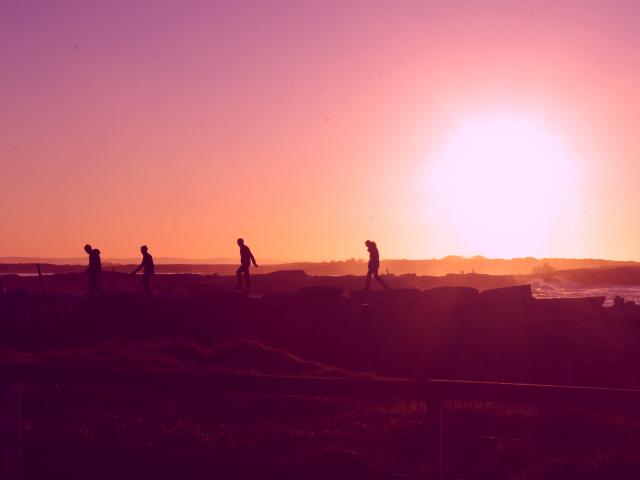
Ile Grande
|
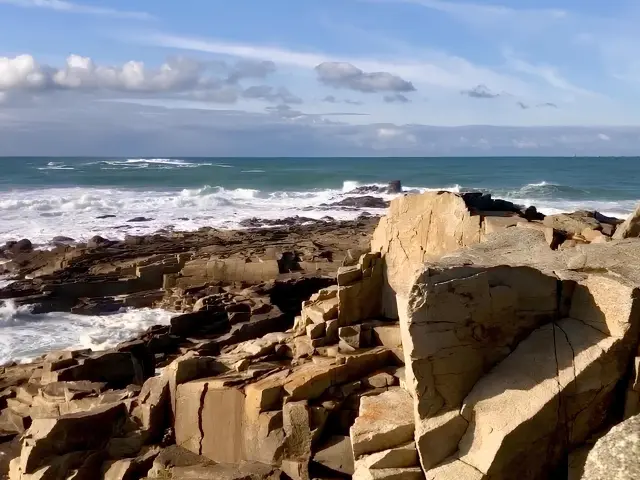
Castel Erek 2 1
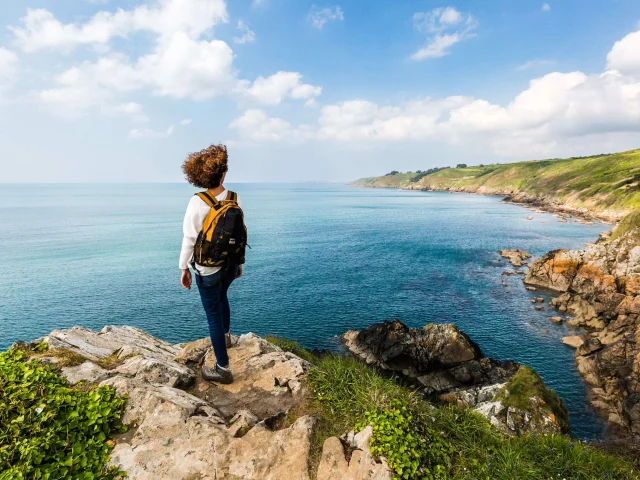
Walking on the cliffs of Tredrez
|
The most dizzying spot
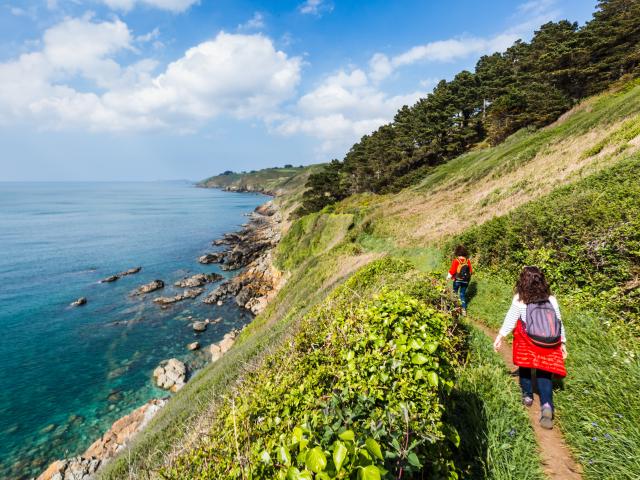
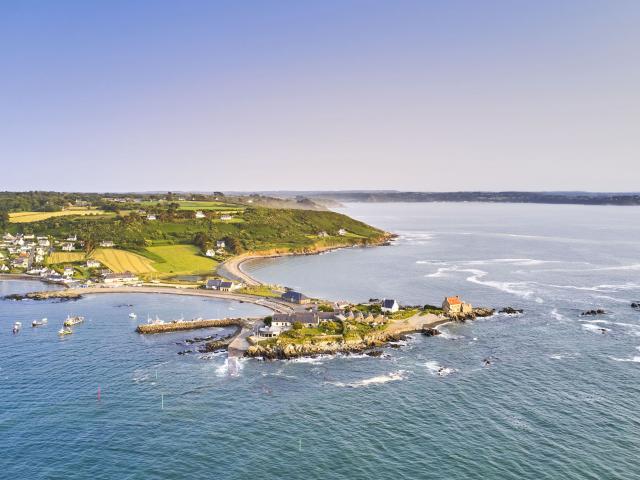
The rugged headlands of the Trédrez cliffs jut out into the bay like stone prows. Beg ar Forn, meaning ‘the end of the oven’ in Breton, is the furthest-out of these headlands, at the southern tip of a wild stretch of coastline considered one of the largest natural areas in the Côtes d’Armor. The western horizon is completely unobstructed here, and on a clear day the view stretches all the way to the coast of Finistère. During the eclipse, the sun will begin its descent towards this horizon at precisely the moment when the Moon obscures it most. An eclipse on the edge of the abyss, amidst rock formations of volcanic and sedimentary origin and coastal heathland.
Pro tip
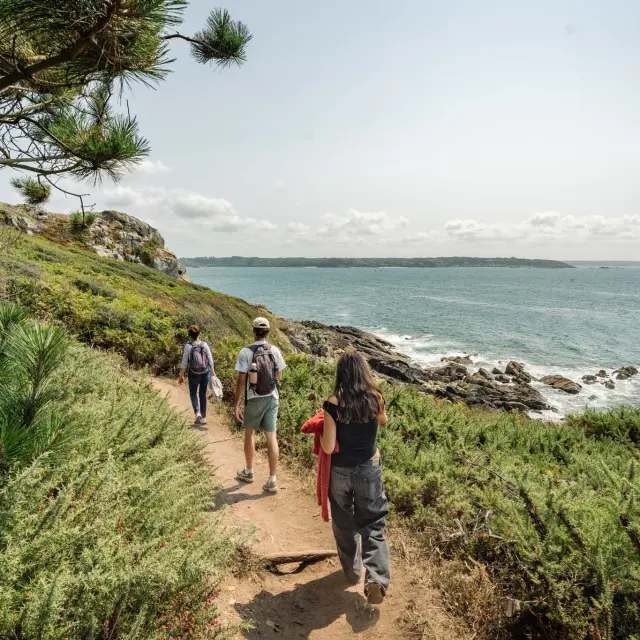
Allow 45 minutes’ walk from Locquémeau harbour, following the GR34.
I can’t wait for 12 August! I can’t decide between the spectacular maritime display at Pointe du Dourven and the magic of the Argoat at the summit of Goariva, following in Cassini’s footsteps. One thing is certain: our panoramic views, from the coast right into the heart of the countryside, will provide an absolutely spectacular backdrop to this historic eclipse.
The most historic spot
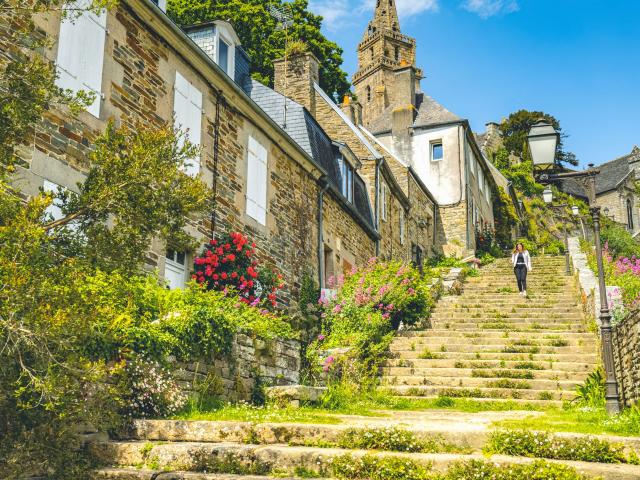
142 steps flanked by small granite houses, a medieval church founded by the Knights Templar, and at the top: a panoramic view over the rooftops of Lannion, the Léguer valley and the Trégor countryside stretching to the horizon. On the evening of 12 August, these heights overlooking the town offer an unexpected vantage point in the heart of the Pink Granite Coast. There’s no sea horizon here, but a unique urban and heritage viewpoint, looking out towards the skies of inland Brittany, and for the people of Lannion, a way to experience the eclipse without leaving their town. Brélévenez means ‘Mount of Joy’. How fitting.
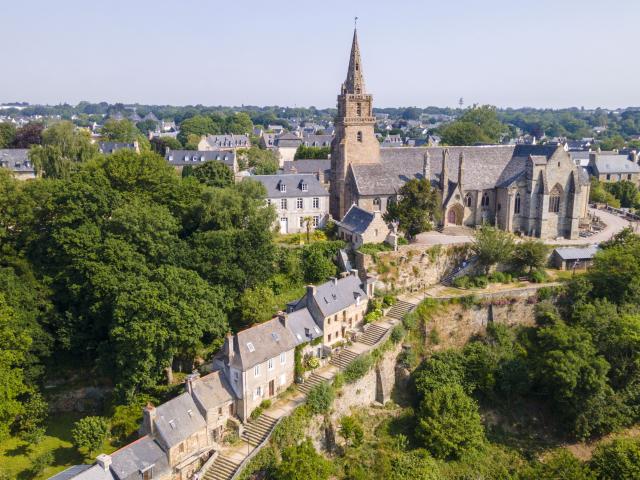
Stairs Brelevenez Studio Jezequel 1
|
Did you know?
The Knights Templar who founded the church at Brélévenez used to observe the stars. They would have loved this event!
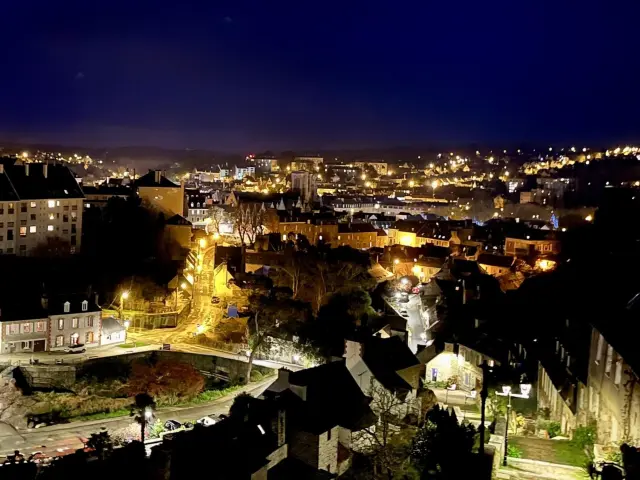
Lannion By Night From Brelevenez
|
The highest spot
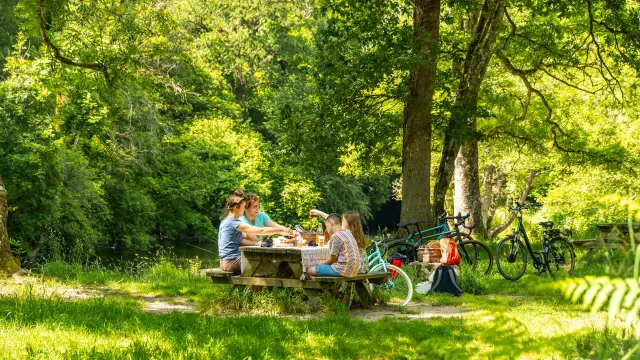
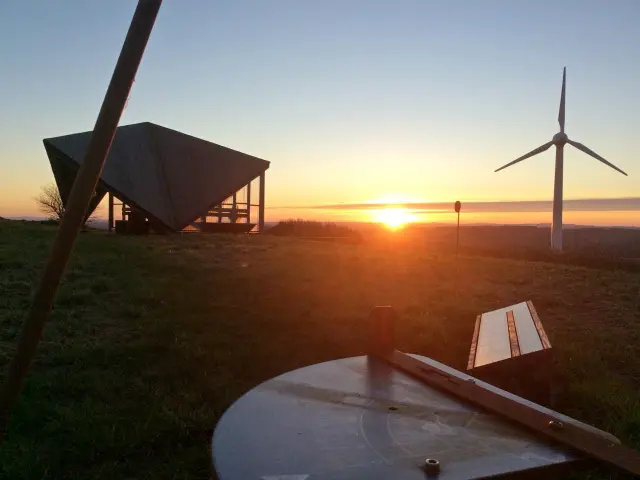
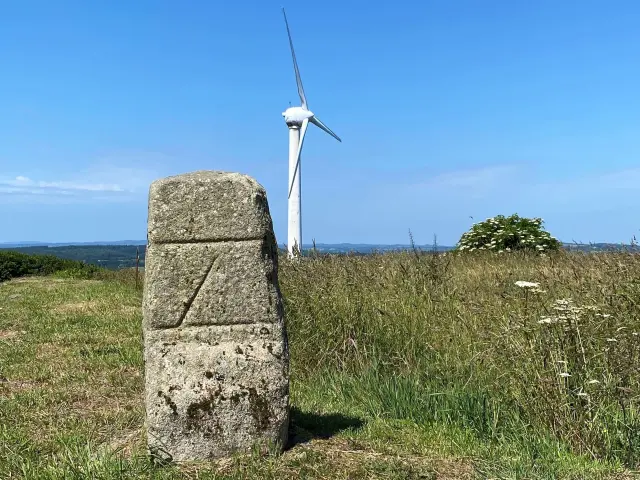
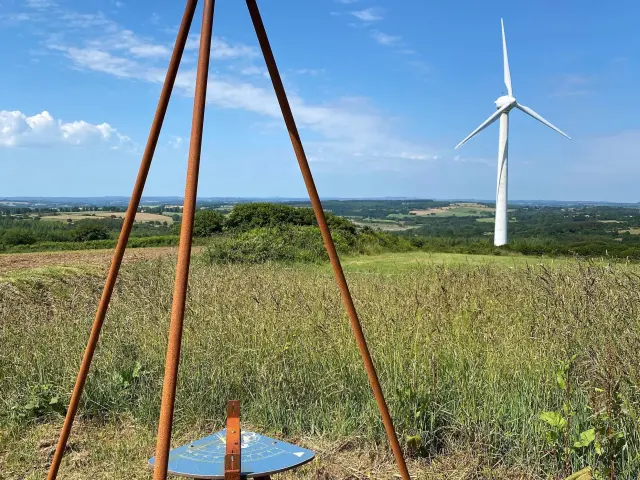
At an altitude of 314 metres, at the foot of the Plougras wind turbines, Goariva offers something few other sites in the region can: a 360° panorama of Trégor, Léon and the Monts d’Arrée, far from the coast and the crowds along the shoreline. On 12 August, this Breton peak becomes an exceptional natural observatory, with a clear sky over the western horizon and darkness even deeper than at the seaside at the peak of the night. It’s the choice of amateur astronomers, families seeking peace and quiet, and those who, on this particular evening, have opted for the heights rather than the beach. The summit hut awaits you for a picnic before the show begins.
Did you know?
In 1736, the surveyor Cassini chose this peak to map the Kingdom of France: it was an ideal vantage point.
The most ‘Breton archipelago’ spot
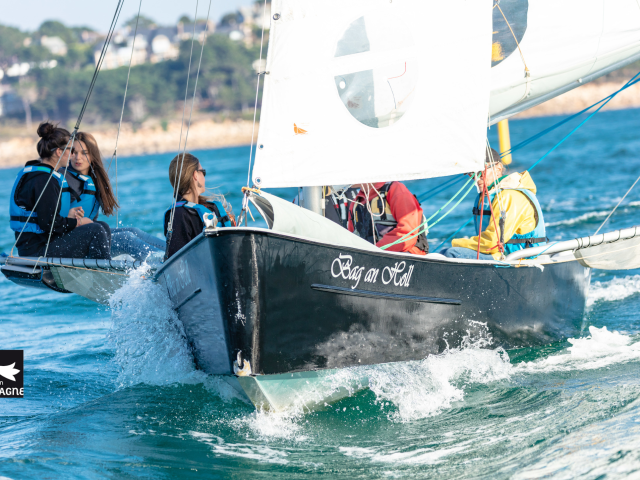
In Port-Blanc, you never quite know where to look next. A dozen islands and islets are scattered between the shore and the open sea – Illiec, Saint-Gildas, Île aux Femmes – creating an inland sea landscape where views open up and close with the ebb and flow of the tide. On this evening of a historic eclipse, against the backdropof this Breton archipelago, the moon will cross paths with the sun as the day draws to a close, against a horizon as distinctive as any on the Pink Granite Coast. A spectacle within a spectacle: the eclipse, and behind it, this string of islets silhouetted in a light unlike anything we have ever seen.
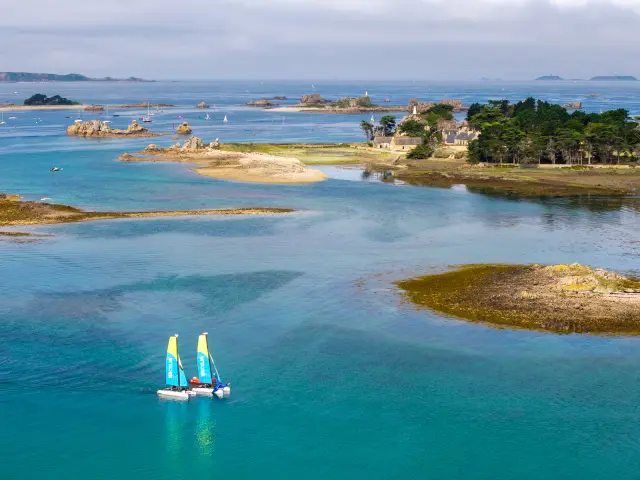
Club nautique de Port Blanc - Pink Granite Coast Tourist Office - 18/07/2025
|
Did you know?
It is said that it was from Port-Blanc that the women used to watch for the return of the men who had gone fishing in Iceland.
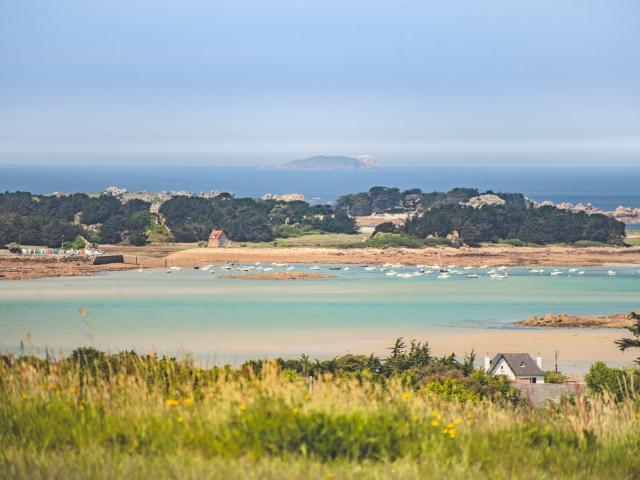
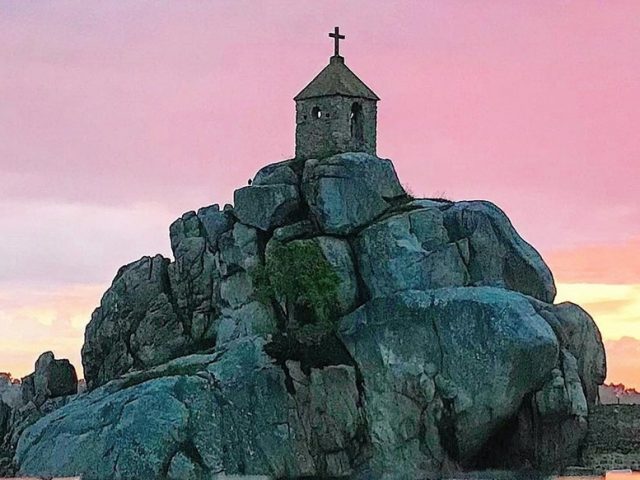
Port Blanc
|
You’ve chosen your viewing spot, picked out your rock, and planned to arrive before 7 pm. There’s just one thing left: ISO 12312-2:2015-certified glasses, without which you’ll have to watch the spectacle with your eyes closed. Available at our tourist information offices and in our online shop, they are the only essential piece of equipment you’ll need to view the eclipse on 12 August in complete safety.
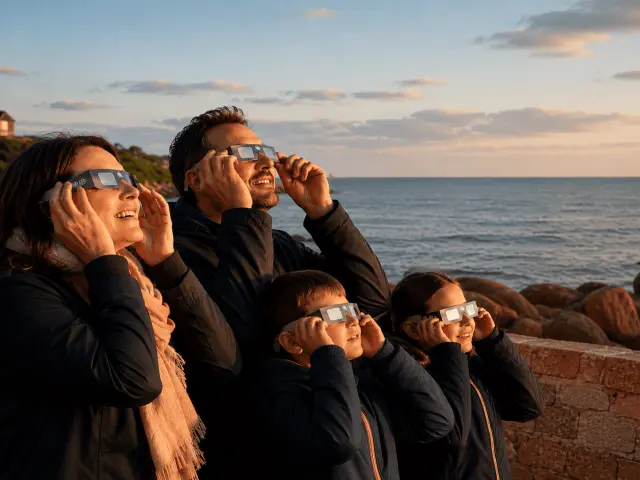
Eclipse on the Pink Granite Coast ChatGPT
Where will you be when the sky and the sea merge in an otherworldly light? To admire the solar eclipse on 12 August 2026, the Pink Granite Coast is showcasing its most beautiful natural settings. Facing the western horizon, our coastline offers panoramas of astronomical clarity from which to watch the sun eclipse itself above the waves. Whether on the sand, atop a rugged cliff or amidst the granite outcrops, discover our must-visit spots to experience this historic event from the front row.